#gadget · 2026-07-24
ASRock PGO27QSA: A $400 QD-OLED That Undercuts the Competition
The verdict
Compelling specs at an expected competitive price, but wait for independent reviews to confirm panel quality and real-world performance.
$400-450 (estimated)
What slaps
- +QD-OLED panel with 99% DCI-P3 and Delta E < 2 factory calibration
- +240Hz at 1440p with 0.03ms response time for competitive gaming
- +Two HDMI 2.1 and two DisplayPort 1.4 inputs for versatile connectivity
- +Available in black or minimal white finish
What stings
- −No pricing confirmed yet, estimated based on ASRock's typical positioning
- −Limited regional availability at launch
- −No independent reviews yet to verify panel quality claims
- −OLED burn-in risk with static content over time
🚩 Before you buy
- !No official pricing confirmed yet, only estimates based on ASRock's typical market positioning
- !Limited regional availability at launch reduces accessibility
- !No independent reviews to verify claimed color accuracy and panel quality
- !OLED burn-in risk exists with prolonged static content exposure
Spec sheet
| Panel Type | 27-inch QD-OLED, flat |
| Resolution | 2560 x 1440 (QHD) |
| Refresh Rate | 240Hz |
| Response Time | 0.03ms (GTG) |
| Color Gamut | 99% DCI-P3 |
| Color Accuracy | Delta E < 2 (factory calibrated) |
| Adaptive Sync | AMD FreeSync Premium |
| Connectivity | 2x HDMI 2.1, 2x DisplayPort 1.4, headphone out |
| Stand Adjustments | Height, swivel, tilt, pivot |
| Price | $400-450 (estimated) |
How it stacks up
| Product | Price | Key spec | Verdict |
|---|---|---|---|
| ASRock PGO27QSA | $400-450 (est.) | QD-OLED, 240Hz, factory calibrated | Best value if priced right |
| Dell Alienware AW2725DF | $599 | QD-OLED, 360Hz, 1440p | Premium option, higher refresh |
| ASUS ROG Swift OLED PG27AQDM | $899 | QD-OLED, 240Hz, custom heatsink | Established brand, higher cost |
| Gigabyte AORUS FO27Q3 | $699 | QD-OLED, 360Hz, DisplayPort 2.1 | Mid-tier pricing, newer tech |
ASRock's QD-OLED Gamble
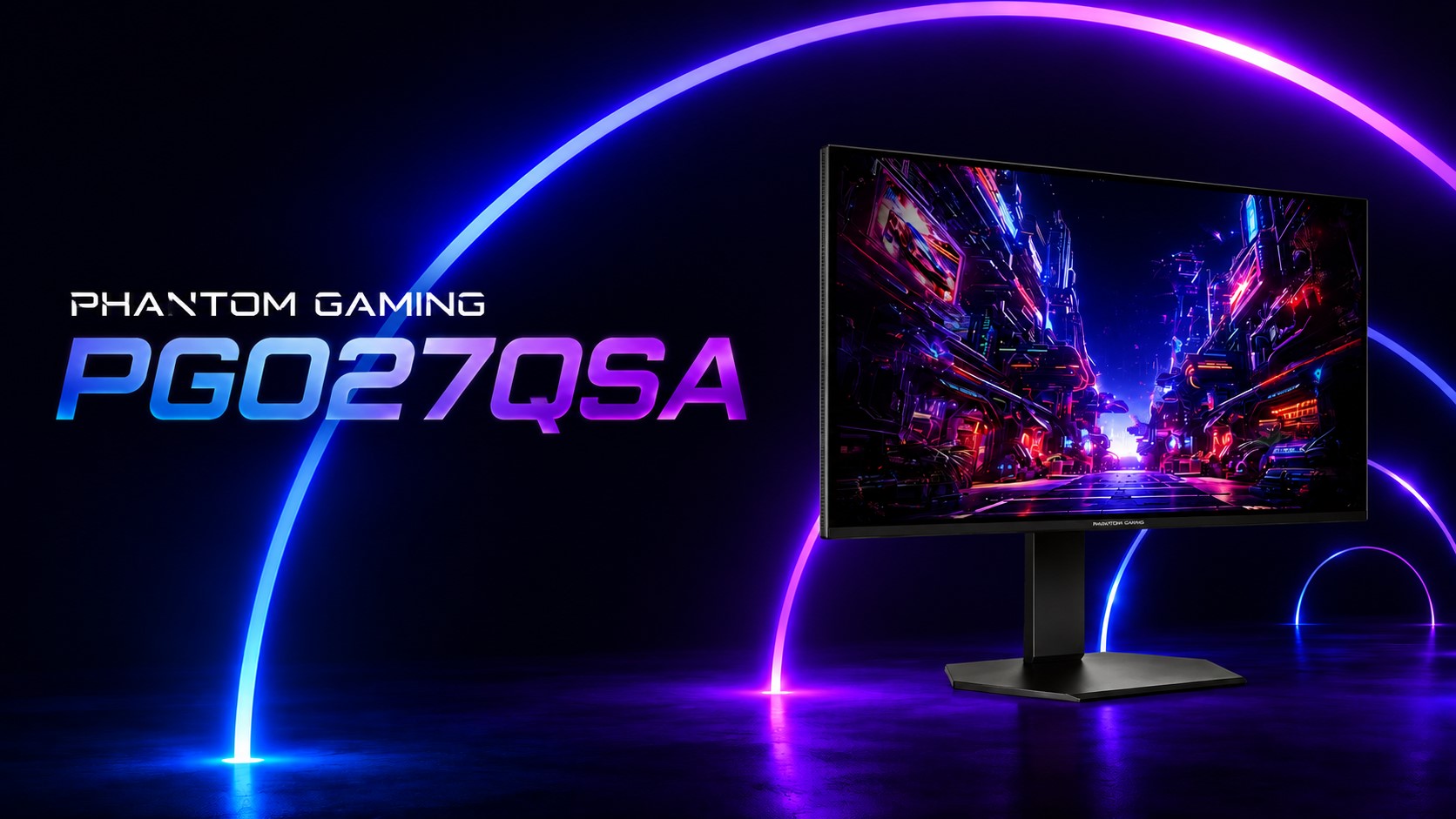
ASRock has quietly built a reputation for undercutting competitors without sacrificing essentials. The company's motherboards and GPUs typically land 10-20% cheaper than ASUS or MSI equivalents while delivering similar performance. Now ASRock is applying that formula to monitors with the PGO27QSA, a 27-inch QD-OLED gaming display targeting the $400-450 range. If ASRock hits that price point, this becomes one of the most affordable QD-OLED panels available.
The PGO27QSA uses a flat QD-OLED panel at 2560x1440 resolution with a 240Hz refresh rate and 0.03ms gray-to-gray response time. QD-OLED technology combines quantum dots with OLED's self-emissive pixels for deeper blacks and more saturated colors than traditional IPS or VA panels. ASRock claims 99% DCI-P3 color gamut coverage and Delta E < 2 color accuracy straight from the factory, specs that usually cost $700+ from established monitor brands.
The Specifications That Matter
The panel itself is the headline feature. QD-OLED delivers per-pixel lighting control, meaning true blacks and infinite contrast ratio. For gaming, this translates to shadow detail in dark scenes and HDR content that actually looks HDR instead of washed out. The 240Hz refresh rate suits competitive titles like Counter-Strike 2, Valorant, and Apex Legends, while the 0.03ms response time eliminates motion blur even during rapid camera movements.
ASRock includes AMD FreeSync Premium, which synchronizes the monitor's refresh rate with your GPU's frame output to eliminate screen tearing. The spec sheet lists two HDMI 2.1 ports and two DisplayPort 1.4 inputs, giving you flexibility to connect a PC, PlayStation 5, and Xbox Series X simultaneously without swapping cables. The stand provides height, swivel, tilt, and pivot adjustments, and ASRock throws in Low Blue Light Technology to reduce eye strain during extended sessions.
| Feature | ASRock PGO27QSA | Dell AW2725DF | ASUS PG27AQDM |
|---|---|---|---|
| Panel Type | QD-OLED | QD-OLED | QD-OLED |
| Resolution | 2560x1440 | 2560x1440 | 2560x1440 |
| Refresh Rate | 240Hz | 360Hz | 240Hz |
| Response Time | 0.03ms | 0.03ms | 0.03ms |
| Price | $400-450 (est.) | $599 | $899 |
The Competition and Pricing Reality
Dell's Alienware AW2725DF costs $599 and bumps refresh rate to 360Hz, which matters if you consistently push 300+ fps in esports titles. ASUS charges $899 for the ROG Swift OLED PG27AQDM, which includes a custom heatsink and more aggressive firmware to combat burn-in. Gigabyte's AORUS FO27Q3 sits at $699 with 360Hz and DisplayPort 2.1 for future-proofing. All three use similar or identical QD-OLED panels from Samsung Display, so image quality differences come down to calibration and panel lottery.
ASRock's advantage is cost. The company typically undercuts premium brands by sourcing aggressively and skipping RGB lighting, proprietary software suites, and premium packaging. If the PGO27QSA lands at $400-450, it becomes the cheapest way to get QD-OLED's image quality. That matters because QD-OLED has been stuck in the $600+ segment, making it inaccessible for budget-conscious gamers who want OLED but cannot justify spending more on a monitor than their GPU.
What ASRock Is Not Telling You
ASRock has not disclosed the panel manufacturer, though Samsung Display supplies most 27-inch QD-OLED panels in this category. The press release does not mention peak brightness in HDR mode, which can vary wildly between implementations of the same panel. OLED burn-in remains a concern, particularly with static UI elements in games like League of Legends or productivity apps with fixed toolbars. ASRock's firmware and pixel-shift algorithms will determine long-term durability, but we have no data yet.
The monitor also lacks G-Sync certification, relying instead on FreeSync Premium. This works fine with NVIDIA GPUs over DisplayPort thanks to G-Sync Compatible support, but you miss out on variable overdrive and other G-Sync Ultimate features. For most users, this is irrelevant. For competitive players chasing every millisecond of latency reduction, it might matter.
The White Variant Gamble
ASRock offers the PGO27QSA-W in minimal white, which looks sharp in photos but introduces practical concerns. White bezels show dust and fingerprints more visibly than black, and the color may yellow over years of UV exposure. It is a styling choice that appeals to users building white-themed setups, but black remains the safer long-term option. The white variant will likely command a $20-30 premium over the black model.
Who Should Buy This
If ASRock delivers on the estimated $400-450 price, the PGO27QSA becomes the value pick for gamers who want OLED's image quality without paying ASUS or Dell premiums. The 240Hz refresh rate handles competitive gaming, and factory calibration means accurate colors for content creation without manual tweaking. It makes sense for 1440p gamers with mid-range GPUs like the RTX 4070 or RX 7800 XT who can actually drive 240fps in esports titles.
Skip this if you need 360Hz for professional esports, want guaranteed G-Sync Ultimate support, or require verified burn-in protection backed by a premium brand's warranty. Also skip if you primarily use the monitor for productivity with static UI elements, as OLED burn-in risk remains real despite pixel-shift technology. Wait for independent reviews to confirm panel quality and firmware performance before committing.
The Verdict
ASRock's PGO27QSA could disrupt the QD-OLED market if priced as expected. The specs match monitors costing $200-500 more, and ASRock has a track record of delivering solid hardware at aggressive prices. However, no independent reviews exist yet to verify color accuracy claims, measure actual brightness levels, or test burn-in mitigation. The monitor is interesting enough to watch closely, but premature to recommend without real-world testing. If reviews confirm the panel performs as advertised, this becomes the budget OLED option everyone has been waiting for.
Get it if
Budget-conscious gamers seeking QD-OLED image quality at 1440p 240Hz who can wait for independent reviews to confirm performance
Skip it if
You need verified burn-in protection, want 360Hz for professional esports, require G-Sync Ultimate certification, or use static UI elements extensively
$400-450 (estimated)
Affiliate links support the site at no cost to you.