#smart-home · 2026-08-12
HomePod Mini 2: Five Years Late, Still Playing Catch-Up to Alexa
The verdict
Promising AI upgrades, but wait to see if Siri actually delivers before buying into a five-year-old design.
$99 (expected)
What slaps
- +S9 chip brings real processing power for on-device AI
- +Wi-Fi 7 and Bluetooth 6 future-proof connectivity
- +Refined audio with better vocals and bass
What stings
- −Identical design to 2020 model after five-year wait
- −Siri AI improvements are promises, not proven
- −Still lacks the smart home integrations Alexa and Google offer
🚩 Before you buy
- !Siri AI improvements are unproven marketing claims until independently tested
- !Five-year gap with no meaningful updates suggests Apple's lack of commitment to this category
- !Premium price ($99) versus proven $50 alternatives with larger ecosystems
Spec sheet
| Chip | S9 (upgraded from S5) |
| Connectivity | Wi-Fi 7, Bluetooth 6, Thread |
| Networking Chip | N1 chipset |
| Audio | Full-range driver, dual passive radiators |
| Smart Assistant | Siri with Apple Intelligence |
| Release Date | Autumn 2026 (expected) |
| Price | $99 (expected) |
How it stacks up
| Product | Price | Key spec | Verdict |
|---|---|---|---|
| HomePod Mini 2 | $99 | S9 chip, Siri AI, Wi-Fi 7 | Wait for reviews |
| Amazon Echo (5th Gen) | $50 | Better Alexa, proven skills, half the price | Best value |
| Google Nest Mini | $49 | Google Assistant, works with everything | Most versatile |
The Five-Year Gap Nobody Asked For
The original HomePod mini launched in November 2020. Since then, Apple added a few new colors in 2021 and quietly enabled the temperature and humidity sensors in 2022. That's it. No chip upgrades, no new features, no reason to buy a second one. Meanwhile, Amazon and Google have shipped multiple Echo and Nest generations, each time widening the gap in smart home integration, voice recognition, and third-party support.
Now, in autumn 2026, Apple is finally ready to launch the HomePod mini 2. The pitch is simple: same compact design, but with a much smarter Siri powered by Apple Intelligence and faster internals to support it. On paper, the upgrades sound meaningful. The S5 chip from 2019 is being replaced with the S9, the same processor that powers the Apple Watch Series 9. Apple is also adding the N1 networking chipset, which brings Wi-Fi 7, Bluetooth 6, and improved Thread support for better smart home communication.
But here's the problem: this is a software-first update to hardware that was already behind in 2020. And the software improvements, while promising, are entirely unproven.
Siri AI: The Make-or-Break Feature
The entire HomePod mini 2 strategy hinges on Siri becoming meaningfully better. Apple is betting that Apple Intelligence, its generative AI framework, will fix the core problems that have plagued Siri for years: weak natural language understanding, inability to handle follow-up questions, and a frustrating habit of responding with "I found this on the web" instead of actually doing what you asked.
According to reports, the new Siri will handle contextual conversations, interpret complex commands, and provide more relevant responses. If that actually works, it would be transformative. Imagine asking Siri to "turn off the lights in the living room" and then following up with "and set the thermostat to 68" without repeating the wake word. Or asking "what's the weather tomorrow" and then "should I bring an umbrella" and having Siri understand the connection.
The S9 chip is key here. It enables on-device machine learning, so more processing happens locally instead of being sent to Apple's servers. That means faster responses and better privacy. The N1 networking chip also helps by reducing latency when communicating with smart home devices via Thread and Matter.
But none of this has been independently tested. Apple has a long history of overpromising Siri improvements that fail to materialize in real-world use. Until reviewers can actually test the new Siri in a variety of scenarios, these are just marketing claims.
Hardware: Faster Internals, Same Shell
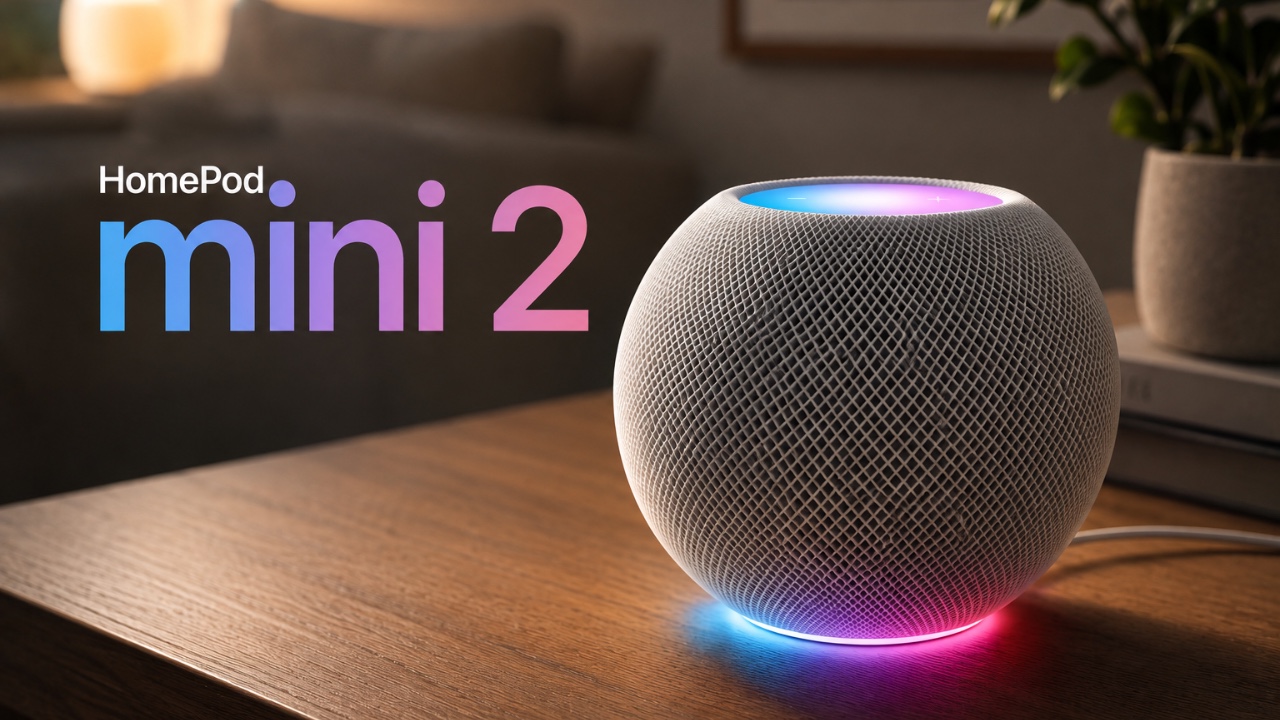
The HomePod mini 2 will look identical to the 2020 model. Same spherical mesh design, same compact footprint, same color options (with possibly a new red variant). For some, that's fine, the original design is clean and inoffensive. For others, it's disappointing that Apple isn't taking the opportunity to add a display, improve the touch interface, or make any visual statement about this being a new generation.
Inside, the upgrades are real. The S9 chip is a significant step up from the S5, bringing faster processing for AI tasks and computational audio. The N1 chipset adds Wi-Fi 7 and Bluetooth 6, both of which are future-proof standards that will matter as more devices adopt them. Thread support is also improved, which is critical for Matter-based smart home setups.
Audio quality is reportedly being refined as well, with cleaner vocals and deeper bass. The original HomePod mini punched above its weight for sound quality, so even modest improvements here would be welcome. However, the physical speaker components (full-range driver, dual passive radiators) appear unchanged, so don't expect a dramatic transformation.
Smart Home Integration: Still Playing Catch-Up
Even with better Siri and faster processing, the HomePod mini 2 will still lag behind Amazon and Google in smart home versatility. Alexa works with over 100,000 devices and has thousands of skills. Google Assistant integrates seamlessly with Google services and supports a massive range of third-party products. Siri, by comparison, works primarily with HomeKit-compatible devices, and while Matter support helps, the ecosystem is still smaller.
If you're already deep in the Apple ecosystem (iPhone, iPad, Apple Watch, Apple TV), the HomePod mini 2 makes sense. It will integrate tightly with your other devices, support Handoff for transferring audio, and work with Siri shortcuts. But if you own non-Apple smart home gear or use services outside Apple's walled garden, you'll constantly bump into limitations.
Should You Buy It?
Here's the honest answer: wait. The HomePod mini 2 has potential, but it's entirely dependent on whether Apple Intelligence actually delivers a meaningfully better Siri. If it does, this could be a solid $99 smart speaker for Apple users. If it doesn't, you're buying a five-year-old design with a faster chip and no real advantage over cheaper alternatives.
The Amazon Echo (5th Gen) costs $50, sounds good, and has Alexa, which for all its flaws actually works reliably with a huge range of devices. The Google Nest Mini is also $49 and integrates with Google services most people already use. Both have been tested and refined over multiple generations. The HomePod mini 2 is launching with unproven software and a premium price.
If you're an Apple loyalist and want the tightest integration with your iPhone and smart home, consider waiting a few weeks after launch to see independent reviews. If Siri AI lives up to the hype, it could be worth the upgrade. If it doesn't, save your money or buy an Echo.
| Feature | HomePod Mini 2 | Echo (5th Gen) | Nest Mini |
|---|---|---|---|
| Price | $99 | $50 | $49 |
| Assistant | Siri (Apple Intelligence) | Alexa | Google Assistant |
| Connectivity | Wi-Fi 7, Bluetooth 6 | Wi-Fi 6, Bluetooth 5.2 | Wi-Fi 5, Bluetooth 5.0 |
| Smart Home | HomeKit, Matter, Thread | 100,000+ devices | Works with Google |
The Bottom Line
The HomePod mini 2 could be Apple's answer to years of Siri complaints, or it could be another incremental update that doesn't move the needle. The hardware is solid, the connectivity is future-proof, and the audio improvements sound promising. But the entire value proposition rests on unproven AI software launching in a category where Apple has consistently underdelivered.
For now, the verdict is wait. Let early adopters test the new Siri. If it actually works as advertised, the HomePod mini 2 could be worth $99 for Apple users. If it doesn't, you'll have saved your money and avoided buyer's remorse.
Get it if
Apple ecosystem users who want tight integration with iPhone, iPad, and HomeKit devices, and are willing to bet on Siri AI improvements.
Skip it if
You use non-Apple smart home devices, need proven voice assistant reliability, or want the best value (Echo and Nest are half the price).
$99 (expected)
Affiliate links support the site at no cost to you.