the wire · #ai · 2026-08-27
Plaud's new earphones come with an eSIM-enabled case for talking to AI agents
Cech Tech Reviews
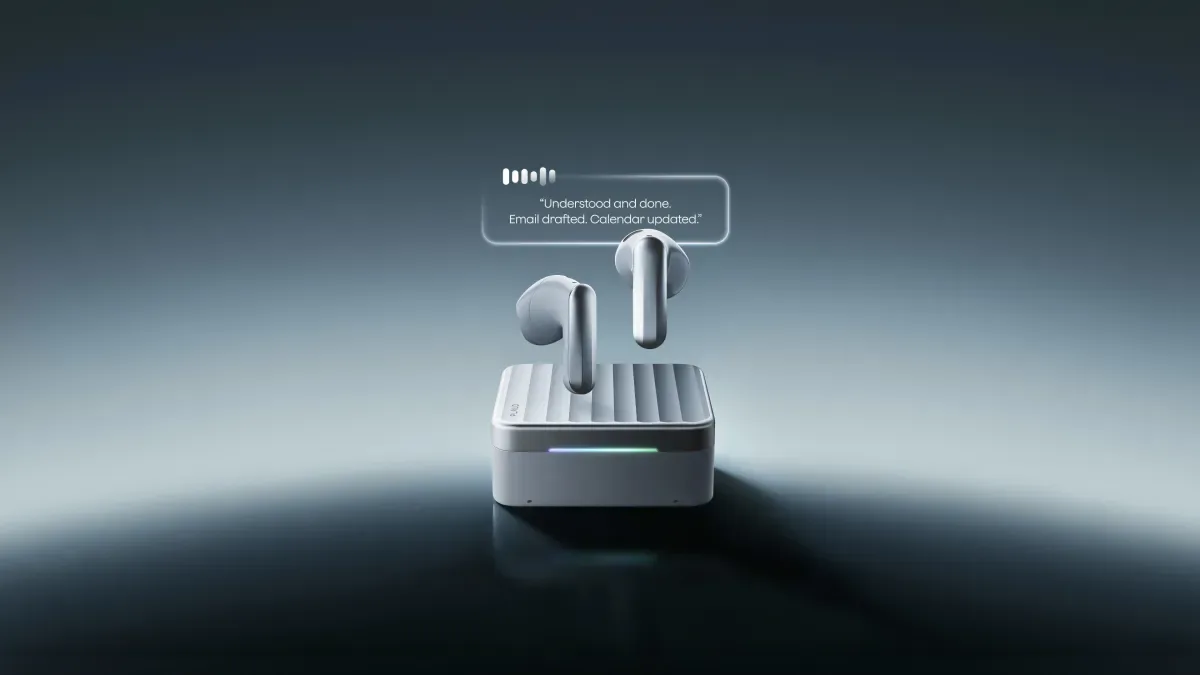
The landscape of wearable technology is shifting from passive health tracking to active productivity augmentation. Plaud has entered this space with the Plaud One, a pair of earbuds that borrow the minimalist aesthetic of Apple AirPods but serve a fundamentally different purpose. According to recent reports, these devices are designed to record calls and capture in-person conversations with high fidelity. The real innovation, however, lies in the charging case, which features an embedded eSIM. This allows the case to operate independently of your smartphone, turning the entire system into a standalone audio capture device.
This hardware design solves a persistent friction point in professional workflows. Currently, recording meetings often requires opening an app, ensuring your phone is nearby, and managing battery life on a device you are already using for communication. Plaud’s approach removes the phone from the equation entirely. By giving the case its own cellular connection, users can leave their phones in their pocket or bag while still capturing audio. This separation of concerns is critical for professionals who need to focus on the conversation rather than managing their recording tools.
The implications for AI agents are significant. We are moving toward a future where AI does not just summarize text but processes continuous audio streams in real time. With Plaud One, the boundary between the physical conversation and the digital assistant blurs. The device can likely stream audio directly to cloud-based AI models for transcription, sentiment analysis, or action item extraction. This creates a new category of AI-native hardware that prioritizes data ingestion over entertainment or communication.
From a privacy and security perspective, this model offers a distinct advantage. Users can keep sensitive business discussions off their primary work phones, which are often subject to stricter corporate monitoring and security protocols. The Plaud One acts as a dedicated, isolated channel for audio data. This could appeal to industries where data segregation is paramount, such as legal, medical, or executive consulting fields. It provides a layer of operational security that software-only solutions struggle to match.
The market for AI-focused wearables is still nascent, but the trajectory is clear. Early adopters are looking for tools that reduce cognitive load by automating documentation. Plaud is positioning itself at the intersection of hardware reliability and AI utility. By leveraging eSIM technology, they are ensuring that the device is always connected and ready to process data, regardless of the user’s proximity to a Wi-Fi network or their mobile device. This independence is a key differentiator in a crowded market of smart glasses and earbuds.
However, the success of this model will depend on the quality of the AI integration. Hardware is only as valuable as the software that processes its data. If the transcription accuracy is low or the AI insights are generic, the premium hardware will not justify the cost. The real value proposition lies in how seamlessly the recorded audio integrates with existing productivity suites. Users need to see a direct return on investment through time saved and information retained.
What this means for you: If you attend numerous meetings or conduct frequent interviews, consider how AI can automate your note-taking. Instead of manually typing summaries, you can experiment with voice-to-text workflows. Try this prompt with your AI assistant after a meeting: "Review the attached transcript and extract three key action items, assign owners based on context, and draft a follow-up email summarizing the decisions made." This simple workflow can save you hours of administrative work each week.
Reporting basis: original story
← back to The Wire