#other · 2026-07-14
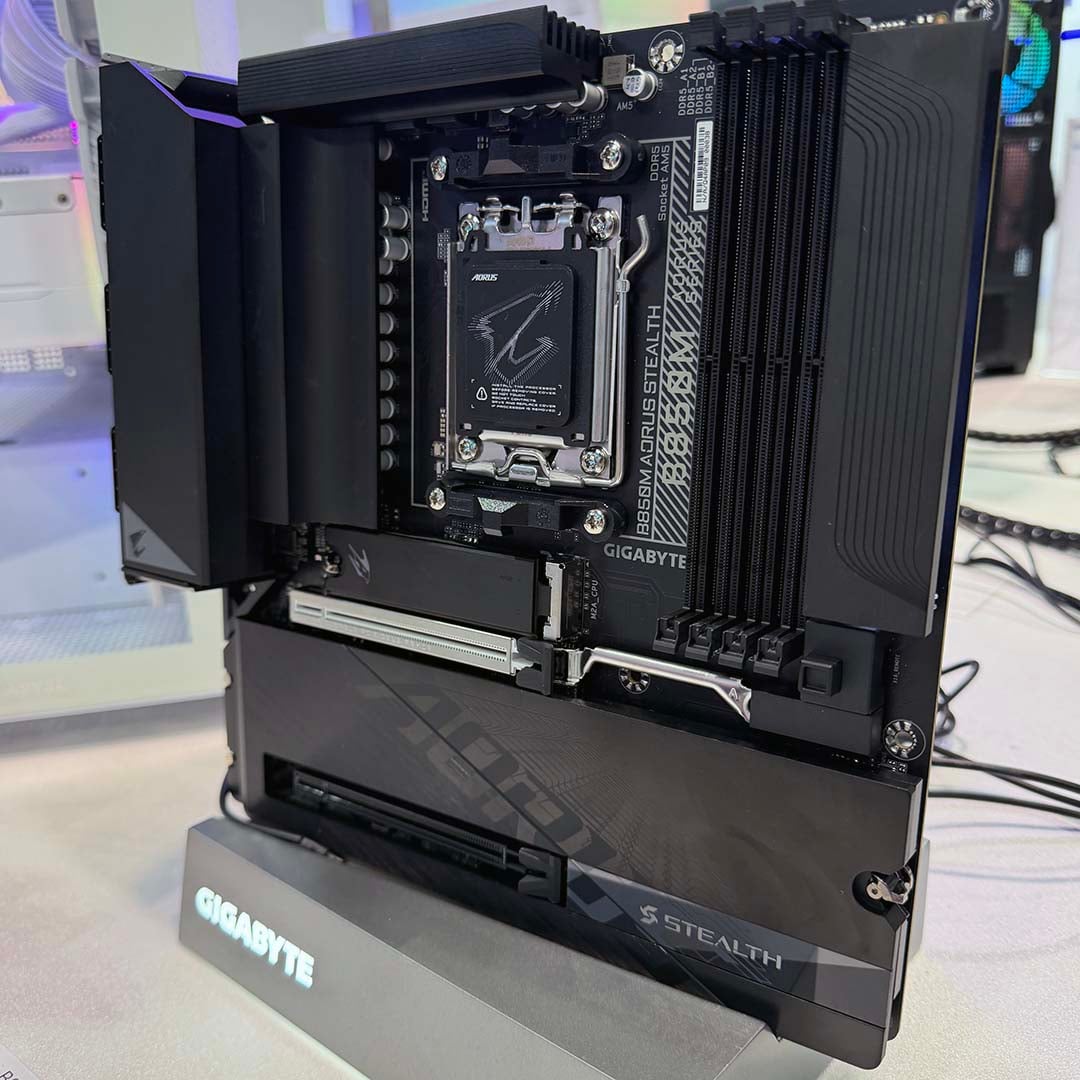
GIGABYTE B850M AORUS Stealth: Back-Connect Boards Finally Go Budget
The verdict
Great concept for clean budget builds, but case compatibility and modest VRM limit its appeal to a specific niche.
$170-190 (estimated)
What slaps
- +First budget micro-ATX board with backside connectors
- +Clean, minimalist design with black or white options
- +DDR5-8200 support and PCIe 5.0 compatibility
- +EZ-latch mechanisms for GPU and M.2 drives
What stings
- −Modest 8+2+2 60A VRM limits overclocking headroom
- −Requires specific case with backside cable routing
- −Limited market availability and quiet launch
- −Fewer rear I/O ports than competing boards
🚩 Before you buy
- !Quiet launch with limited availability in key markets
- !Case compatibility severely limits potential buyer pool
- !No display outputs for APU users despite budget positioning
Spec sheet
| Socket | AMD AM5 |
| Form Factor | Micro-ATX |
| Chipset | AMD B850 |
| VRM | 8+2+2 phases, 60A |
| Memory | 4x DIMM DDR5, up to DDR5-8200, 256GB max |
| PCIe Slots | 1x PCIe 5.0 x16, 1x PCIe 4.0 x4 |
| M.2 Slots | 3 total (1x Gen 5 x4, 2x Gen 4 x4) |
| Networking | WiFi 7, 5G LAN |
| Price | $170-190 (estimated) |
How it stacks up
| Product | Price | Key spec | Verdict |
|---|---|---|---|
| GIGABYTE B850M AORUS Stealth | $170-190 (est) | Backside connectors, DDR5-8200 | Best for clean budget builds |
| MSI MAG B850M Mortar WiFi | $180 | 12+2+1 VRM, standard layout | Better VRM, more compatible |
| ASUS TUF Gaming B850M-Plus | $165 | 10+1 VRM, robust I/O | Best value for performance |
The Back-Connect Revolution Goes Mainstream
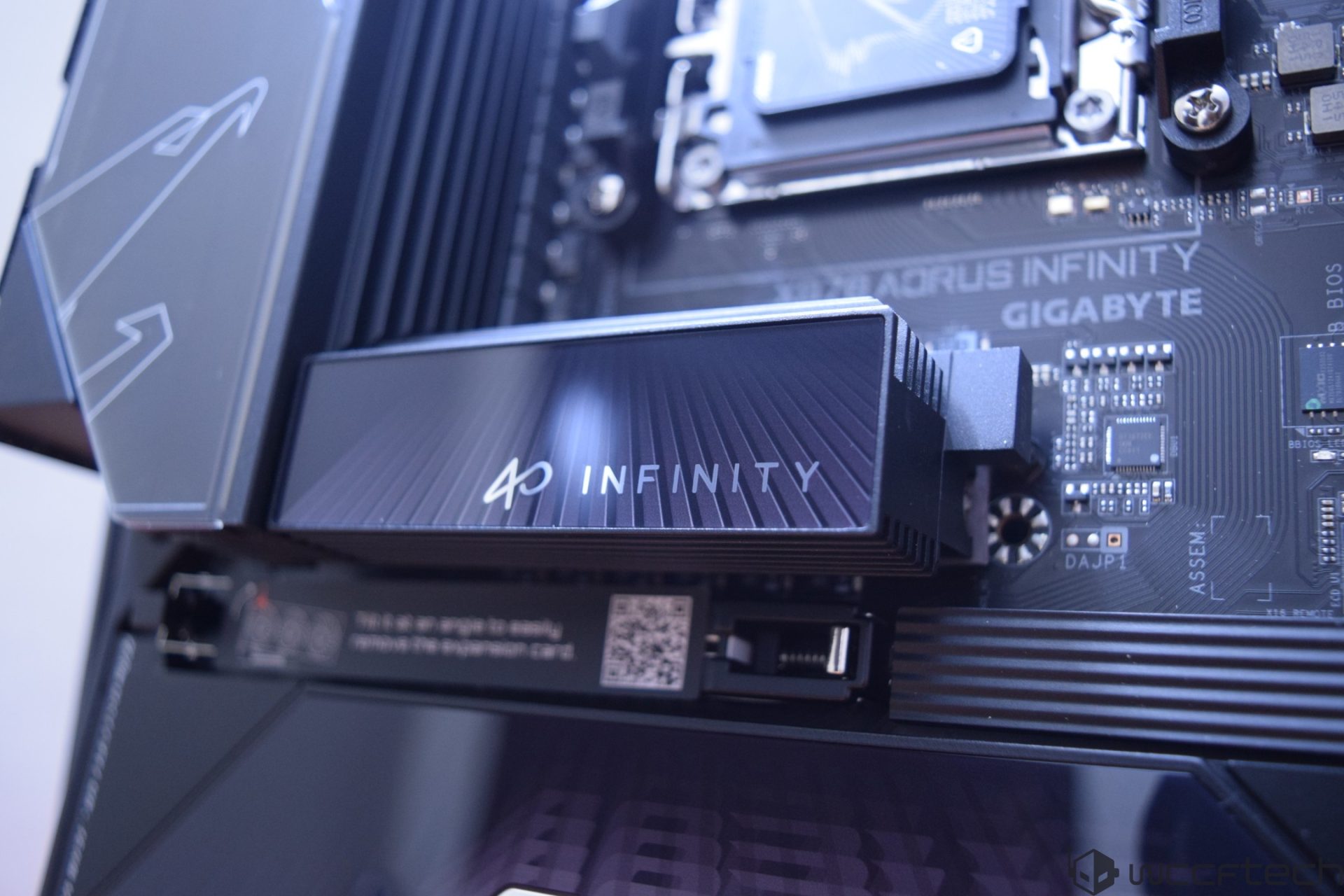
GIGABYTE dropped the B850M AORUS Stealth into its lineup with minimal fanfare, but it represents something genuinely new: the first micro-ATX motherboard with all power, SATA, and fan connectors relocated to the back of the PCB. Until now, this cable-hiding trick has been reserved for expensive ATX boards targeting enthusiasts willing to pay $300+ for aesthetics. The B850M AORUS Stealth brings that concept to the budget AM5 segment, where most builders actually live.
Available in both black and white (the latter branded as B850 AORUS Stealth Ice), this board strips away the RGB lighting, aggressive heatsink designs, and branding overload that plague most gaming motherboards. The result is a genuinely minimalist aesthetic that lets your GPU and RAM do the talking. If you've ever wanted a PC build that looks like it belongs in a design magazine rather than a LAN party, this is your entry point.
The catch? You need a case designed for backside cable routing. Brands like Lian Li, Corsair, and NZXT are rolling out compatible options, but selection remains limited compared to traditional cases. If your current case doesn't have the necessary cutouts in the right locations, this board's signature feature becomes useless, or worse, a compatibility nightmare.
AM5 Platform With Practical Compromises
The B850M AORUS Stealth supports AMD's full Ryzen 7000, 8000, and 9000 series processors, including the gaming-focused X3D variants. GIGABYTE includes its X3D Turbo Mode feature, claiming up to 18% performance gains on Ryzen 9000 CPUs. Real-world testing suggests more modest improvements, typically 5-8%, but any free performance is welcome.
The 8+2+2 phase 60A VRM is where budget reality sets in. This power delivery system will handle any AM5 processor at stock settings without thermal throttling, but it's not built for pushing a Ryzen 9 9950X to its limits with manual overclocking. If you're buying a $600 CPU, you should be pairing it with a board that has more robust power delivery. For Ryzen 7 and Ryzen 5 chips, which represent the sweet spot for this board's price range, the VRM is perfectly adequate.
Memory support tops out at DDR5-8200 across four DIMM slots, with a maximum capacity of 256GB. That's competitive with boards twice the price, and more than enough headroom for future upgrades. The micro-ATX format means you're not losing memory capacity compared to full-size ATX boards.
Storage and Expansion: Solid But Not Excessive
Three M.2 slots give you plenty of storage flexibility. The primary slot runs at PCIe 5.0 x4 speed, ready for the latest 14GB/s SSDs, while the secondary slots operate at PCIe 4.0 x4. All three slots feature GIGABYTE's EZ-latch mechanism, which replaces the traditional tiny screw with a tool-free clip system. This is genuinely useful, especially when you're working in a compact case where access is already tight.
The PCIe slot configuration is standard for micro-ATX: one PCIe 5.0 x16 slot for your GPU, plus a PCIe 4.0 x4 slot for capture cards, WiFi upgrades, or additional storage. The first slot also uses an EZ-latch design, making GPU swaps less frustrating. Note that depending on your CPU choice, particularly older Ryzen 8000 series chips, the main PCIe slot may drop to Gen 4.0 speeds. This won't bottleneck any current GPU, but it's worth understanding the limitation.
Rear I/O is sparse but functional: USB 3.2 Gen 2 Type-C and Type-A ports, WiFi 7 antenna connectors, 5G Ethernet, and basic audio jacks. There's no DisplayPort or HDMI output for APU users, which is an odd omission on a budget board where integrated graphics might actually get used.
| Specification | Details |
|---|---|
| Socket | AMD AM5 |
| Chipset | AMD B850 |
| VRM | 8+2+2 phases, 60A |
| Memory | 4x DDR5 DIMM, up to DDR5-8200, 256GB |
| Storage | 3x M.2 (1x Gen 5, 2x Gen 4) |
| Networking | WiFi 7, 5G LAN |
The Competition: More Power or More Compatibility
At an estimated $170-190, the B850M AORUS Stealth competes directly with mainstream micro-ATX boards that offer different tradeoffs. The MSI MAG B850M Mortar WiFi ($180) delivers a beefier 12+2+1 phase VRM that's better suited to higher-end CPUs and overclocking, plus it works with every case on the market. The ASUS TUF Gaming B850M-Plus ($165) undercuts on price while offering a 10+1 VRM and more robust rear I/O.
What those boards don't offer is the cable-free aesthetic. If you're building in a compatible case and value clean looks over maximum performance headroom, the GIGABYTE board justifies its existence. If you're planning to overclock or already own a traditional case, the competitors make more sense.
| Motherboard | Price | VRM | Key Feature |
|---|---|---|---|
| GIGABYTE B850M AORUS Stealth | $170-190 | 8+2+2 60A | Backside connectors |
| MSI MAG B850M Mortar WiFi | $180 | 12+2+1 | Better VRM, universal compatibility |
| ASUS TUF Gaming B850M-Plus | $165 | 10+1 | Best value, robust I/O |
Who Should Buy This
The B850M AORUS Stealth is purpose-built for a specific type of builder: someone planning a new micro-ATX system in a compatible case, using a mid-range Ryzen CPU at stock settings, who values aesthetics over every last percentage point of performance. If that description matches your next build, this board delivers exactly what it promises.
The minimalist design is genuine, not marketing speak. There are no fake heat spreaders, no RGB light strips that you'll immediately disable in BIOS, and no aggressive gamer aesthetic. It's a professional-looking component that disappears into your build, which is precisely the point.
For overclockers, extreme performance seekers, or anyone building in an existing case, this board's limitations outweigh its aesthetic advantages. The VRM is adequate but not impressive, and the whole backside connector concept only works if your case is designed for it. GIGABYTE's quiet launch and limited initial availability also mean you might struggle to actually find one in stock.
Get it if
Builders planning a new micro-ATX system in a compatible case who prioritize clean aesthetics and will run mid-range Ryzen CPUs at stock speeds.
Skip it if
You already own a traditional case, plan to overclock heavily, need robust rear I/O with display outputs, or want a board that's widely available.
$170-190 (estimated)
Affiliate links support the site at no cost to you.