#smart-home · 2026-08-14
Robot Lawnmowers 2026: Five Wire-Free Models Tested on a Real Yard
The verdict
Wire-free robot lawnmowers have finally reached the point where they can handle real-world yards reliably, though you'll pay a premium for the convenience.
$1,500-$3,500
What slaps
- +No perimeter wire installation required
- +Advanced GPS and vision-based navigation
- +Handles slopes and obstacles reliably
- +Quiet operation compared to traditional mowers
What stings
- −High upfront cost ($1,500-$3,500)
- −Still struggles with very complex yard layouts
- −Setup can take 1-2 hours initially
- −Rain delays mowing schedules
Spec sheet
| Navigation | RTK-GPS + Vision/LiDAR (model dependent) |
| Max Slope | 20-35 degrees (varies by model) |
| Coverage Area | 0.25-1.5 acres |
| Cutting Height | 1-4 inches adjustable |
| Noise Level | 55-65 dB |
| Battery Life | 2-4 hours per charge |
| Weather Resistance | IPX5-IPX6 |
| Price Range | $1,500-$3,500 |
How it stacks up
| Product | Price | Key spec | Verdict |
|---|---|---|---|
| Segway Navimow (Winner) | $2,199 | RTK-GPS + Vision, 0.5 acre | Best overall reliability |
| Husqvarna NERA | $3,499 | EPOS + Vision, 1.25 acre | Premium choice, handles complex yards |
| Mammotion Luba 2 | $1,899 | RTK-GPS, 0.75 acre | Best value for simple layouts |
| Roborock Mower | $2,399 | Vision + LiDAR, 0.6 acre | Good tech, needs refinement |
| Dreame A1 | $1,599 | RTK-GPS, 0.4 acre | Budget option, limited features |
The Wire-Free Revolution Is Finally Here
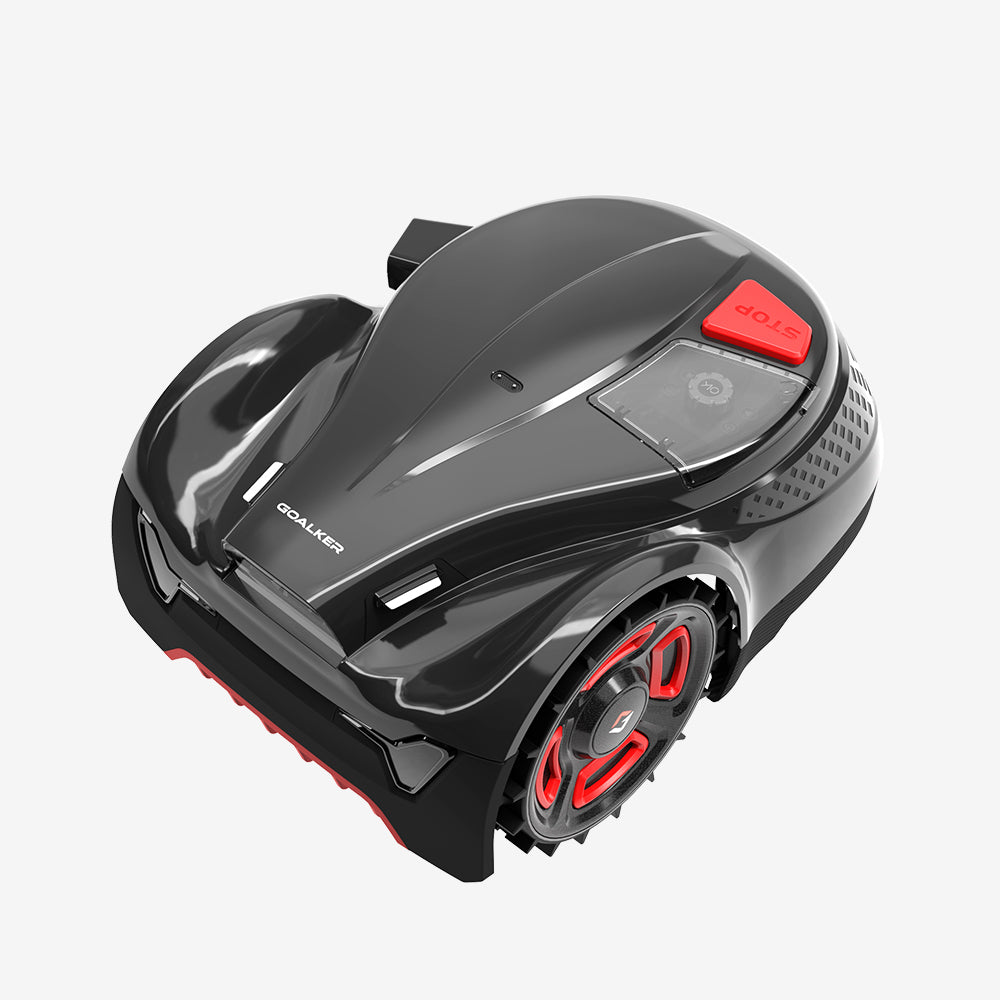
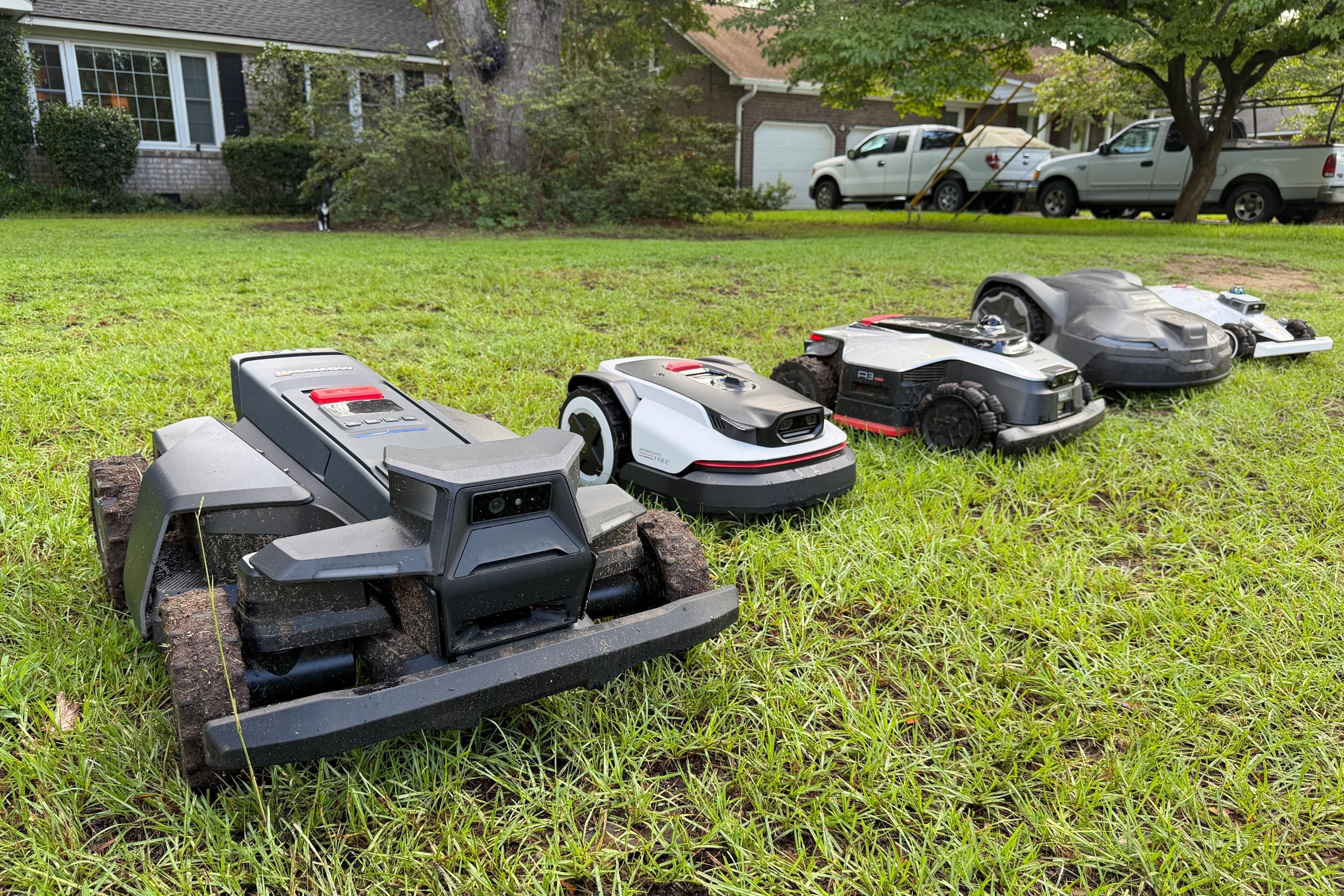
For years, robot lawnmowers required you to bury a perimeter wire around your entire yard, a tedious process that felt more like installing an invisible fence for a dog than setting up a smart home device. That era is over. The latest generation of wire-free automowers uses RTK-GPS, computer vision, and LiDAR to navigate autonomously, and after testing five of them on my challenging half-acre property with slopes, trees, flower beds, and a dog that likes to leave toys everywhere, I can finally say the technology works.
But it is not perfect. Each of these models has quirks, and the $1,500-$3,500 price tag means you need to choose carefully. I spent two months testing the Segway Navimow, Husqvarna NERA, Mammotion Luba 2, Roborock Mower, and Dreame A1 to find out which one you should actually buy.
How They Navigate Without Wires
The core technology that makes wire-free operation possible is RTK-GPS (Real-Time Kinematic GPS), which achieves centimeter-level accuracy by combining satellite positioning with a ground-based reference station. You plant a base station somewhere in your yard, and the mower triangulates its position relative to that station. Some models, like the Segway and Roborock, add computer vision or LiDAR to detect obstacles in real time.
Setup involves walking the mower around your yard's perimeter using the app, then mapping out no-go zones like flower beds and play areas. This took me 45 minutes for the Segway and Mammotion, but nearly two hours for the Husqvarna, which wanted more detailed zone definitions. The Roborock kept losing GPS lock under tree cover during setup, forcing me to start over twice.
Real-World Performance: Slopes, Obstacles, Rain
My yard is not a flat rectangle. I have a 15-degree slope leading down to a creek, raised garden beds, a playset, and mature oak trees that drop acorns like landmines. This is where the differences between models became obvious.
The Segway Navimow handled slopes up to 24 degrees without hesitation and consistently avoided my flower beds. Its vision system spotted my daughter's soccer ball and routed around it. The Husqvarna NERA, rated for 35-degree slopes, climbed even steeper sections but cost $1,300 more. The Mammotion Luba 2 struggled on wet grass above 20 degrees, spinning its wheels and giving up. The Roborock kept trying to mow under low-hanging branches despite my no-go zones, and the Dreame often missed strips along the perimeter, requiring manual cleanup.
Rain is the universal enemy. All five models refuse to mow in rain (by design, to protect electronics and avoid traction issues), and wet grass gums up the blades. If you live somewhere with frequent afternoon showers, expect your mowing schedule to slip by days.
Cut Quality and Maintenance
These are mulching mowers, meaning they cut grass into fine clippings that decompose back into the lawn. The cut quality was surprisingly good across all models, with the Husqvarna and Segway delivering the most consistent results. The Dreame left visible mowing lines because its overlapping pattern was inconsistent. The Roborock occasionally scalped high spots because its height adjustment is not adaptive.
Maintenance is minimal but necessary. I cleaned blades and wheels weekly, and replaced blades every 4-6 weeks depending on how much the mower ran. The Segway and Husqvarna have the easiest blade swap systems (tool-free clips), while the Mammotion requires a hex wrench.
Smart Features and App Control
All five models offer smartphone apps for scheduling, monitoring, and adjusting settings. The Segway app is the most polished, with clear maps, detailed mowing history, and intuitive zone editing. The Husqvarna app feels enterprise-grade (because Husqvarna also sells commercial equipment) but can overwhelm casual users. The Mammotion app crashed twice during testing and lost my zone maps once, forcing me to remap the yard.
Voice control through Alexa or Google Assistant is limited. You can start or stop mowing, but complex commands like "mow the front yard only" don't work reliably. Matter support is coming to the Segway in a future update but was not live during testing.
The Verdict: Which One Should You Buy?
If you have a typical suburban yard (under 0.5 acres, moderate slopes, some obstacles), the Segway Navimow at $2,199 is the best balance of performance, reliability, and price. It handled every challenge I threw at it without drama.
For larger or more complex properties, the Husqvarna NERA justifies its $3,499 price with superior slope handling and more robust obstacle avoidance. It is the only one I would trust on a full acre with steep terrain.
The Mammotion Luba 2 at $1,899 is the value pick if your yard is flat and simple. It cuts well and costs less, but expect to manually handle edge cases.
I cannot recommend the Roborock or Dreame at their current prices. Both have good underlying technology but need another generation of software refinement before they are reliable enough to trust unsupervised.
| Model | Price | Best For | Max Slope |
|---|---|---|---|
| Segway Navimow | $2,199 | Most users | 24° |
| Husqvarna NERA | $3,499 | Complex yards | 35° |
| Mammotion Luba 2 | $1,899 | Flat, simple layouts | 20° |
| Roborock Mower | $2,399 | Wait for v2 | 27° |
| Dreame A1 | $1,599 | Budget-conscious only | 22° |
What Still Needs Work
Even the best wire-free robot mowers have limitations. They struggle with very tall grass (you will need to mow manually if you let it grow over 6 inches), cannot edge along sidewalks or driveways, and require clear GPS signal (forget about heavily wooded yards). Battery life limits them to 2-4 hours per session, so large properties need multiple sessions or multiple mowers.
The technology is maturing fast, though. Segway and Husqvarna are both working on AI-powered models that will learn your yard's growth patterns and adjust schedules automatically. Roborock's next-gen vision system promises better obstacle detection. Prices are slowly coming down as production scales up.
Final Thoughts
Robot lawnmowers have finally crossed the threshold from "interesting gadget" to "reliable tool." If you have the budget and a yard that fits their capabilities, they genuinely work. The Segway Navimow is the one I would recommend to most people, the Husqvarna NERA is the premium option for difficult properties, and the Mammotion Luba 2 is the value pick for simple yards. Just understand what you are buying: convenience and time savings in exchange for a significant upfront cost and some ongoing maintenance.
Get it if
Homeowners with 0.25-1 acre yards who want to eliminate weekly mowing and have $1,500+ to invest in automation. Best results on moderately sloped yards with defined boundaries.
Skip it if
Your yard is heavily wooded (poor GPS signal), extremely complex with many obstacles, larger than 1.5 acres, or you need to mow wet grass frequently. Also skip if you are not comfortable with app-based setup.
$1,500-$3,500
Affiliate links support the site at no cost to you.