the wire · #ai · 2026-09-01
John Deere launched an AI chatbot for farmers
Cech Tech Reviews
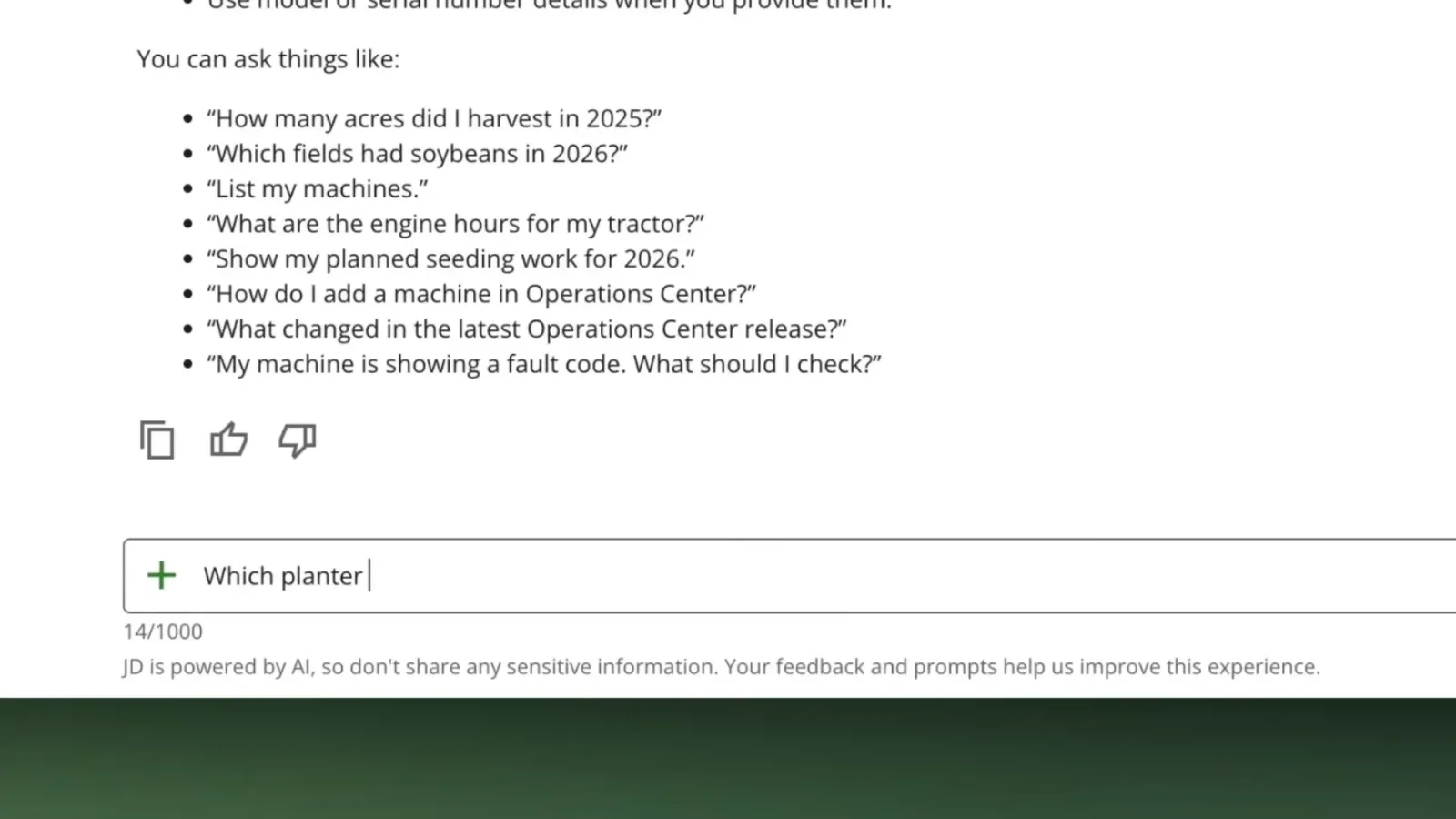
John Deere just launched an AI assistant called JD that gives farmers personalized advice based on their own equipment and field data, according to The Verge. The chatbot can answer questions about equipment settings, fuel consumption patterns, and optimal harvest timing by tapping into the historical records each farm generates through connected machinery.
What makes this announcement notable is not the technology, it's the context. John Deere has spent years fighting farmers and the FTC over repair restrictions, facing sustained backlash for locking owners out of their own equipment diagnostics. Now the company is prominently highlighting a ten-point Farmer Data Commitment that promises not to sell customer data and gives farmers control over their information.
That commitment feels less like a feature and more like a prerequisite. Farmers have been deeply skeptical of John Deere's data practices, and an AI tool that requires handing over operational details would have been dead on arrival without explicit privacy guarantees. The timing suggests John Deere understands it needed to rebuild trust before asking for more data access.
The press release did not specify which underlying AI model powers the assistant, which is typical for early-stage agricultural tech announcements. The company is running an Early Access Program, meaning this is still in testing and likely being refined based on real-world farm feedback.
From a practical standpoint, an AI that can query years of site-specific data could genuinely help farmers optimize operations. Instead of manually reviewing logs or guessing based on last season's notes, operators could ask natural language questions and get answers grounded in their own historical performance. That is valuable if the system works reliably and the data stays secure.
What this means for you: If you manage any operation with significant historical data, whether it's logistics, manufacturing, or service delivery, the same pattern applies. An AI assistant trained on your own records can surface insights faster than manual analysis. Try this prompt with your AI tool: "Based on the performance data from the last six months, what are the three operational patterns that correlate most strongly with higher output or lower costs?" Adjust the timeframe and metrics to match your context, and use it as a starting point for identifying optimization opportunities you might have overlooked.
Reporting basis: original story
← back to The Wire