the wire · #ai · 2026-07-24
OpenAI is making big claims as it rolls out ChatGPT Health to everyone
Cech Tech Reviews
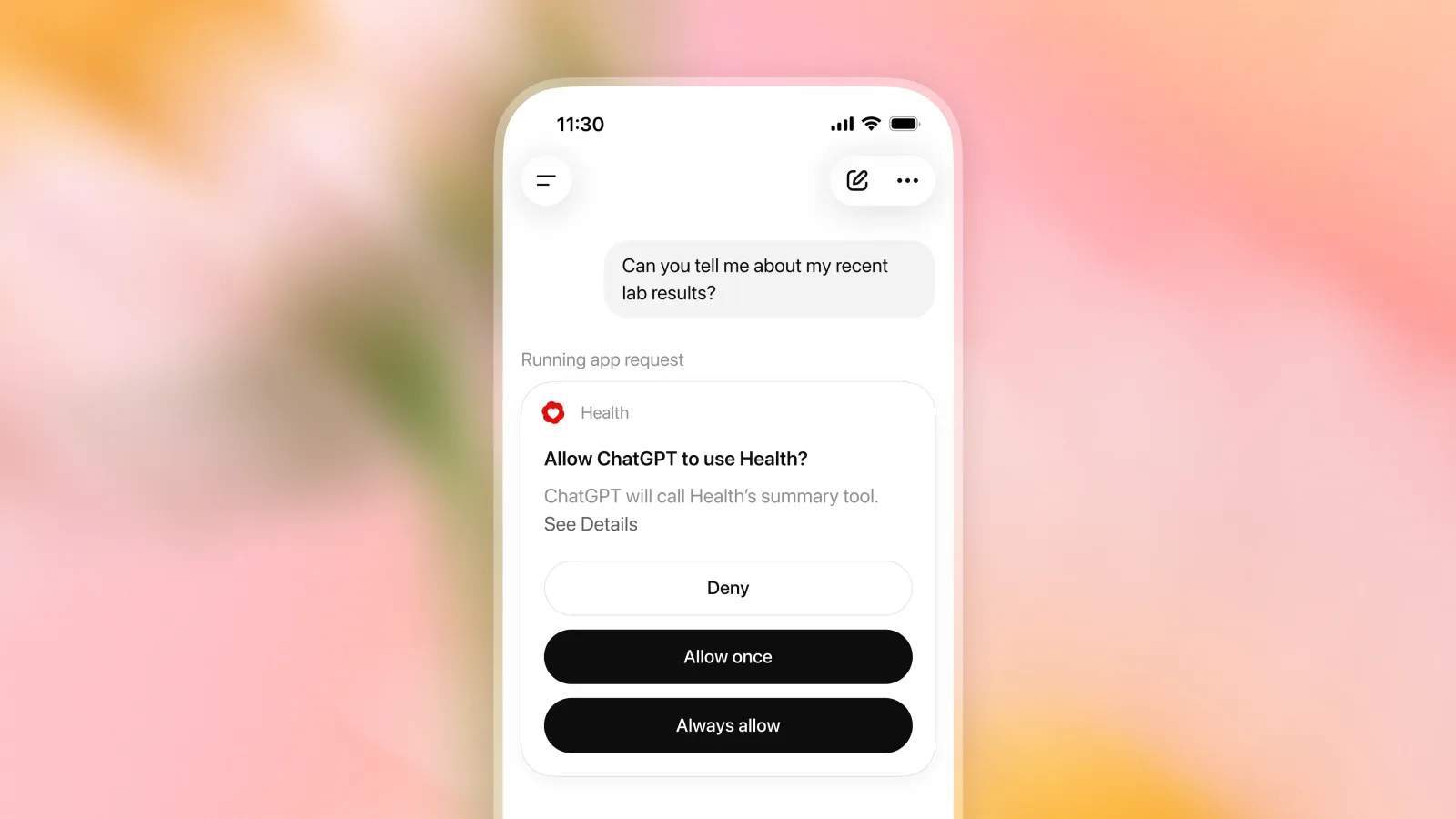
OpenAI is taking a significant step toward mainstream healthcare integration by rolling out ChatGPT Health to every user in the United States. This move transforms the feature from a limited beta into a widely accessible tool, allowing individuals to connect their medical records and health tracking data directly to the chatbot. According to reporting by The Verge, this expansion marks a pivotal moment in how consumer AI interacts with sensitive personal health information.
The company is backing this launch with bold assertions about the underlying technology. Ashley Alexander, OpenAI's vice president of health product, stated during a briefing that their models are now capable of reasoning at levels that surpass those of human clinicians. This claim is designed to instill confidence in users and providers alike, suggesting that the AI can handle complex medical contexts with greater accuracy than traditional human analysis.
However, the narrative becomes more nuanced when you look closer at the internal dialogue surrounding these claims. Karan Singhal, the lead for OpenAI health, appeared to temper the aggressive marketing language during the same briefing. When pressed for concrete details on how the model stacks up against human doctors, Singhal suggested that the superior reasoning claim needed careful interpretation rather than blind acceptance.
Singhal pointed to individual studies that showed promising results but stopped short of declaring a universal victory for the AI. This distinction is critical because it highlights the difference between performance on specific, isolated tasks versus holistic clinical judgment. It suggests that while the AI may excel at pattern recognition or data synthesis, it does not yet replace the nuanced decision-making of a human professional.
From an AIdeaFlow perspective, this discrepancy between executive ambition and operational reality is where the real story lies. The tech industry often struggles with the gap between prototype capabilities and production readiness. OpenAI is navigating this tightrope by offering a powerful tool while simultaneously managing expectations about its limitations in high-stakes medical environments.
For professionals and entrepreneurs in the health tech space, this rollout signals a shift toward democratized health data access. Users can now experiment with AI-driven insights on their own records, which could lead to better personal health management. Yet, it also raises questions about data privacy and the reliability of AI-generated medical advice for the general public.
What this means for you is that you should approach these tools with informed skepticism. Use AI to organize your health data or find patterns, but never as a substitute for professional medical advice. Try this workflow: upload your recent lab results to an AI assistant and ask it to summarize trends over time and suggest questions to ask your doctor, keeping the AI as an analyst rather than a diagnostician.
Reporting basis: original story
← back to The Wire