the wire · #ai · 2026-07-23
Claude’s voice mode is now available for Opus and Sonnet
Cech Tech Reviews
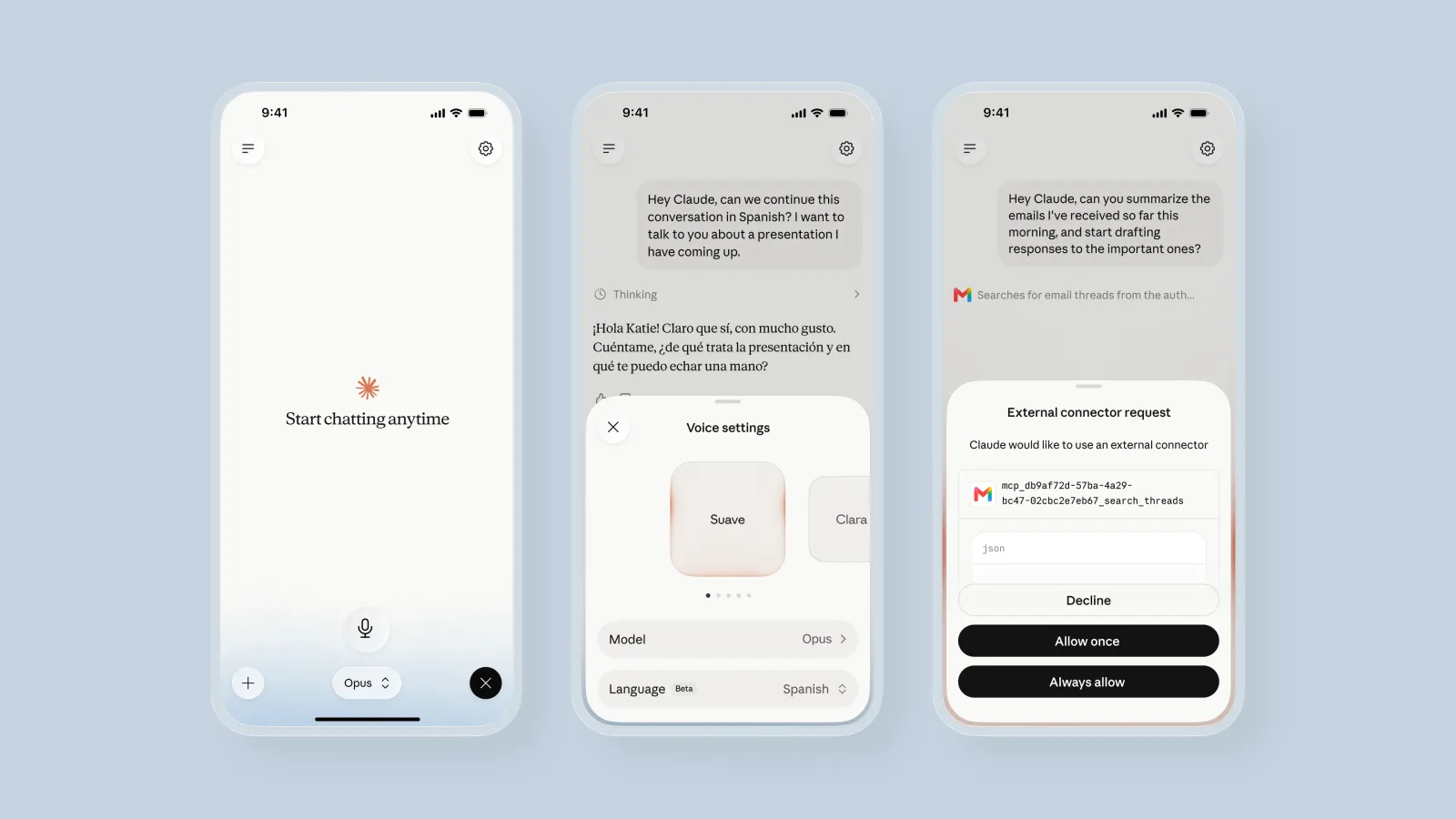
Anthropic is bringing Claude's voice mode to its heavy hitters. According to The Verge, the company just expanded voice capabilities beyond the lightweight Haiku model to include both Opus and Sonnet, and it's rolling into productivity apps like Gmail, Slack, and Canva.
This is a bigger shift than it sounds. When Anthropic launched voice mode last year, the pitch was speed over depth. Haiku could handle quick lookups and casual questions, but it wasn't built for the kind of extended reasoning people actually started using it for. Users weren't just asking for weather updates. They were talking through business strategy, debugging code, and working on real problems that needed Claude to think, not just respond fast.
That gap between what Haiku could do and what people wanted is exactly why this expansion matters. Opus is Anthropic's most capable model, built for complex tasks that require nuanced reasoning. Sonnet sits in the middle, balancing performance and speed. Bringing both into voice mode means you can now have the kind of conversation with Claude that actually mirrors how you'd work through a problem with a colleague, not just fire off one-off questions.
The app integrations make this even more practical. Voice mode in Gmail means you could dictate and refine emails on the fly. In Slack, you could workshop ideas or get quick summaries without breaking your flow. Canva integration suggests Anthropic is thinking about creative workflows where voice could speed up iteration. This isn't just about talking to an AI. It's about embedding that conversation directly into the tools where you're already working.
The timing also aligns with a broader industry trend. OpenAI has been pushing advanced voice with GPT-4, and Google is embedding Gemini voice features across its ecosystem. Anthropic is making a clear play to stay competitive by giving users access to its best reasoning models through the most natural interface we have.
What this means for you: if you've been using Claude for anything more demanding than quick answers, voice mode with Opus or Sonnet could change how you work through complex problems. Try this prompt in voice mode next time you're stuck on a project: "I'm working on [describe your project]. Walk me through three different approaches to solve [specific problem], and help me think through the tradeoffs of each one." Let the conversation flow naturally, and use follow-up questions to dig deeper. Voice mode with a reasoning-capable model turns Claude into a thinking partner, not just a search engine.
Reporting basis: original story
← back to The Wire