the wire · #ai · 2026-07-23
Alexa Plus is getting an AI update to handle more complicated instructions
Cech Tech Reviews
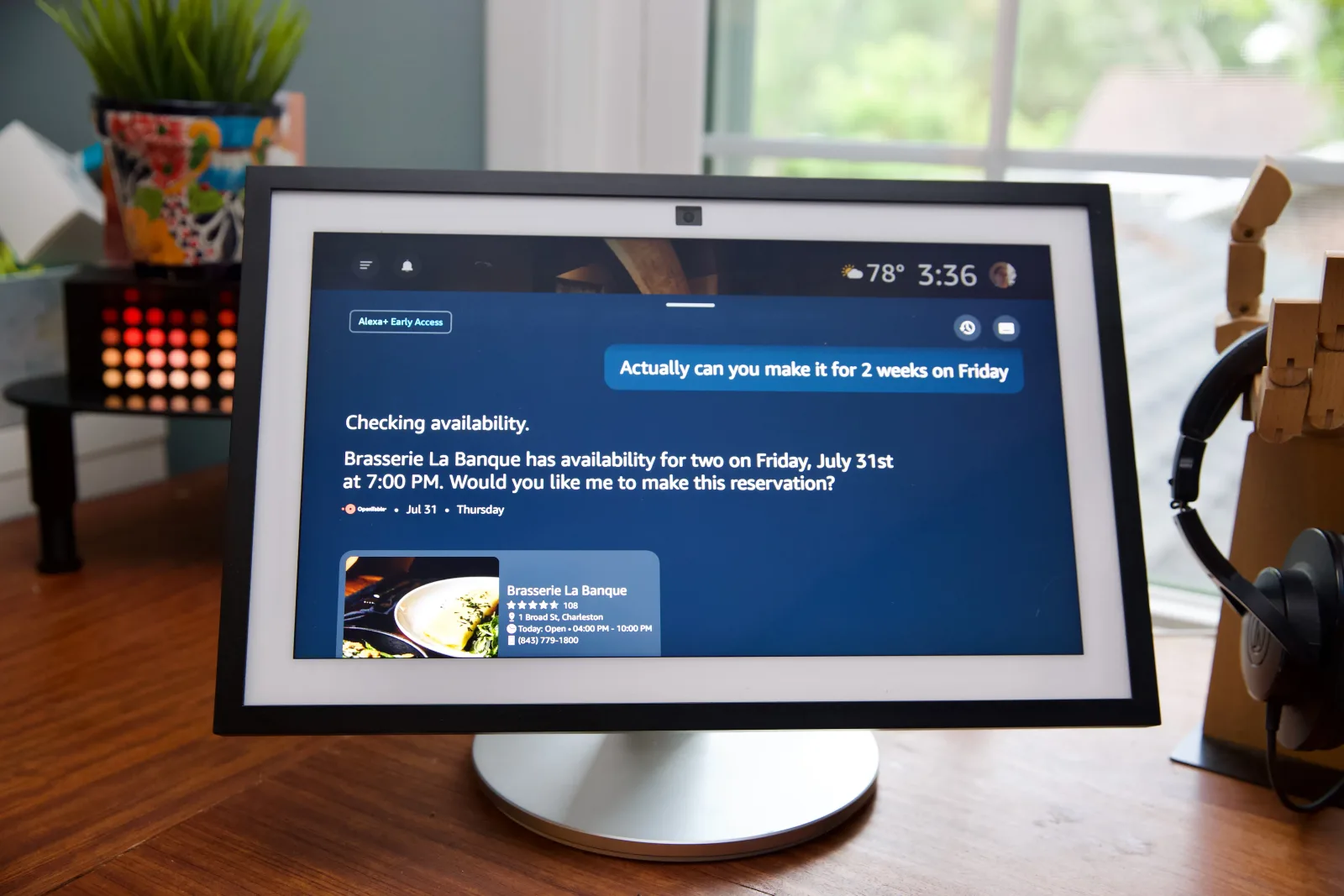
The landscape of voice assistants is undergoing a subtle but significant transformation. Amazon is rolling out a major update to its Alexa Plus subscription service, aiming to bridge the gap between simple command execution and genuine contextual understanding. According to The Verge, this new iteration allows the assistant to connect with a broader ecosystem of smart home devices from major brands like Bosch, Whirlpool, and iRobot.
The real story here is not just the list of partners, but how the AI handles the instructions. Previous generations of smart home tech required rigid, specific commands. If you wanted to start a washing machine, you had to know the exact wake word and phrase. This new update leverages large language models to interpret nuanced, multi-part requests that reflect how humans actually speak.
Consider the example Amazon shared regarding a washing machine. A user can say, "Alexa, my kid's soccer jersey could use a deep clean, but the tag says cold wash only." The system does not just look for a button labeled "wash." It parses the intent, identifies the object, checks the constraint about cold water, and then navigates the specific interface of that particular washer to select the correct cycle.
This represents a massive leap in utility for consumers who are tired of fragmented smart home apps. By automatically routing requests to the correct device, Alexa Plus is attempting to become a central orchestrator rather than just a remote control. The preview includes integrations with tech from Yale Home, Tapo, Eufy, and Delta, suggesting a push to dominate the entire home automation stack.
For AI enthusiasts, this highlights the industry's shift toward agentic workflows. We are moving away from chatbots that just talk and toward agents that act. The ability to translate abstract human desires into precise technical configurations is the holy grail of consumer AI. It reduces cognitive load and makes technology feel invisible, which is the ultimate goal of good design.
However, this also raises interesting questions about privacy and data ownership. For the AI to understand that a soccer jersey needs a cold wash, it must have detailed knowledge of your laundry habits, your children's schedules, and the specific capabilities of your appliances. The convenience comes at the cost of deeper data integration across multiple vendor ecosystems.
What this means for you The era of rigid voice commands is ending. As these models mature, you will be able to describe problems rather than issuing commands. To prepare for this shift, try using your current AI assistant to draft complex natural language prompts for your smart home routines. For example, you might ask an AI to generate a series of conditional statements for your home automation platform based on a scenario like "If it rains, close windows and adjust thermostat." This helps you think in terms of outcomes rather than steps.
Here is a prompt you can use with an AI assistant to map out your own smart home logic:
"Act as a smart home automation expert. I have a [Device Type] from [Brand]. I want to create a routine where [Specific Condition] triggers [Desired Action]. Please break down the natural language intent into specific technical parameters and suggest the most efficient way to configure this in a standard smart home platform."
Reporting basis: original story
← back to The Wire