#dev-board · 2026-10-06
ESP32-S3 Super Mini: Full Wi-Fi, Bluetooth, and PSRAM for $5
The verdict
Best ultra-compact ESP32 for compute-heavy tasks, camera projects, or anything needing PSRAM, though the C3 Super Mini is better for simple Wi-Fi gadgets.
$5
What slaps
- +Dual-core 240MHz CPU with 8MB PSRAM handles compute-intensive tasks
- +Native USB support simplifies debugging and programming
- +Wi-Fi 6 and Bluetooth 5 (LE) connectivity at $5
What stings
- −Ceramic antenna struggles in metal enclosures or crowded RF environments
- −No standardized vendor means inconsistent LED placement and charging circuits
- −23.5mm length won't fit designs optimized for the 22.52mm C3
🚩 Before you buy
- !Inconsistent vendors mean unpredictable battery charging circuits and LED placement
- !Ceramic antenna performance degrades significantly in metal enclosures
Spec sheet
| CPU | Dual-core Xtensa LX7, 240MHz |
| RAM | 512KB SRAM + 8MB PSRAM |
| Flash | 8MB (typical) |
| Connectivity | Wi-Fi 6 (2.4GHz), Bluetooth 5 (LE) |
| USB | Native USB-OTG (Type-C) |
| GPIO | 18 pins (2 x 9 rows, 2.54mm pitch) |
| Dimensions | 23.5 x 18mm |
| Antenna | Ceramic on-board |
| Power | 5V USB-C, optional battery pads (charge controller varies by vendor) |
| Price | $5 (September 2026) |
How it stacks up
| Product | Price | Key spec | Verdict |
|---|---|---|---|
| ESP32-S3 Super Mini | $5 | Dual-core 240MHz, 8MB PSRAM, Wi-Fi 6 | Best for compute, cameras, AI |
| ESP32-C3 Super Mini | $3 | Single-core 160MHz, no PSRAM, Wi-Fi 4 | Best for simple Wi-Fi sensors |
| ESP32-C6 Super Mini | $5 | Single-core 160MHz, Zigbee/Thread/Matter | Best for mesh networks |
What You Get for $5
The ESP32-S3 Super Mini crams Espressif's dual-core S3 chip, 8MB of PSRAM, Wi-Fi 6, Bluetooth 5, and native USB into an 18mm-wide footprint. At $5, it delivers the compute and memory needed for camera projects, TensorFlow Lite inference, or multi-tasking IoT applications that would choke a cheaper single-core board. The 23.5mm length adds one extra GPIO row compared to the original C3 Super Mini, bringing the total to 18 accessible pins across two rows of nine.
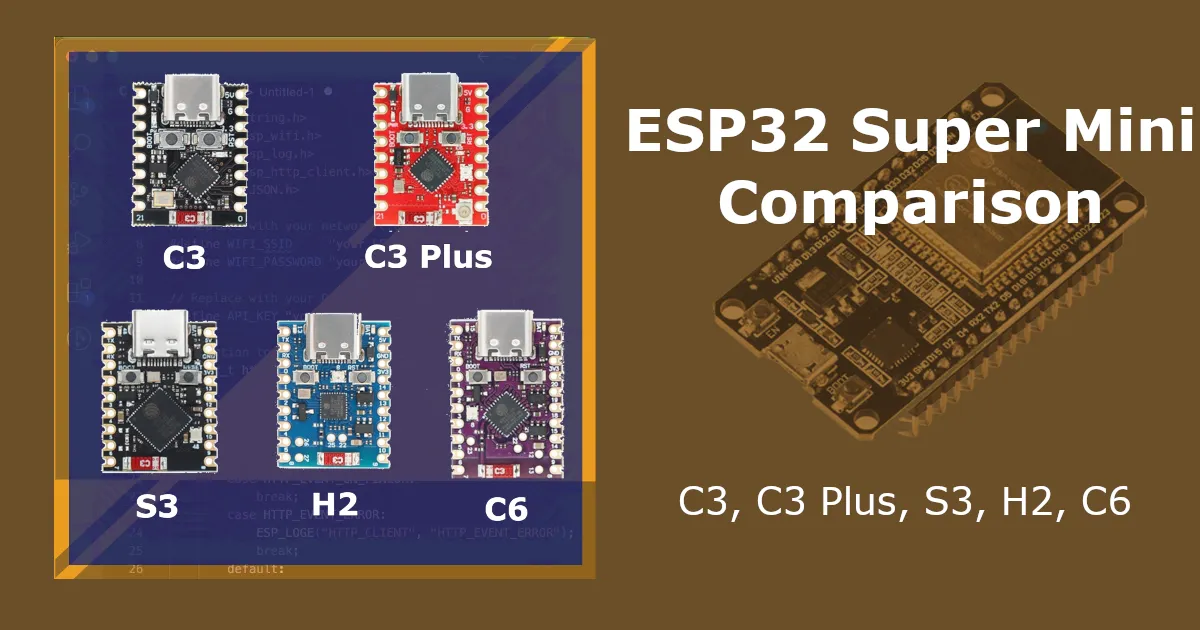
Unlike Espressif's official dev boards, the Super Mini line comes from unnamed Chinese factories, so "ESP32-S3 Super Mini" describes a form factor, not a single product. This means the LED color, battery charging circuit, and even antenna type can vary between vendors. Most ship with a ceramic antenna soldered to one end, some include a u.FL socket for an external antenna, and build quality ranges from adequate to concerning.
Performance and Connectivity
The dual-core Xtensa LX7 CPU runs at 240MHz, doubling the single-core C3's throughput. The 8MB PSRAM is the standout feature here. It allows frame buffering for camera modules, larger neural network models, or multi-threaded applications that need more than the 512KB of internal SRAM. Wi-Fi 6 support (2.4GHz only, no 5GHz) improves efficiency in congested environments, and Bluetooth 5 LE handles peripheral roles or mesh networking.
Native USB-OTG eliminates the need for a separate USB-to-serial chip, so the board enumerates directly as a USB device for programming, debugging, or HID emulation. This simplifies firmware updates and makes the S3 more versatile than the C3 for USB gadgets.
| Specification | ESP32-S3 Super Mini |
|---|---|
| CPU Cores | 2x Xtensa LX7 @ 240MHz |
| Memory | 512KB SRAM + 8MB PSRAM |
| Flash | 8MB (typical) |
| Wi-Fi | 802.11ax (Wi-Fi 6), 2.4GHz |
| Bluetooth | 5.0 LE |
| GPIO Count | 18 (2 x 9 rows) |
Size, Power, and Build Quality
At 23.5 x 18mm, the S3 is 1mm longer than the C3 Super Mini, which matters if your enclosure or PCB layout assumed the C3's 22.52mm footprint. The 2.54mm pin pitch and 15.24mm row spacing remain standard, so existing headers fit. Battery pads on the underside accept a single-cell Li-ion or LiPo, but the charge controller chip varies by vendor. Some boards include proper charging logic, others ship with minimal or missing protection circuitry. If you plan to run this on battery, verify what you are actually getting before soldering a cell to it.
Deep sleep current ranges from 10 to 20 microamps depending on configuration, making battery-powered sensors viable if you use the ULP coprocessor and disable peripherals aggressively. Active Wi-Fi power draw peaks around 200mA, typical for ESP32 chips.
The Antenna Problem
The ceramic antenna is the board's weakest link. It works fine in open air or plastic enclosures, but signal strength drops noticeably inside metal cases or near other 2.4GHz radios. If your project demands reliable range or operates in a crowded RF environment, budget for a board variant with a u.FL socket and an external antenna. Some vendors offer both, others do not list which version you are buying until it arrives.
Software and Ecosystem
The S3 is well supported in Arduino IDE, ESP-IDF, PlatformIO, and MicroPython. Espressif's official libraries handle the PSRAM transparently, and most camera or AI examples target the S3 specifically because of the extra memory. ESP-IDF gives you full control over both CPU cores, FreeRTOS task pinning, and the ULP coprocessor. Arduino abstracts most of that, which is fine for simpler projects but leaves performance on the table.
ESPHome integration works but assumes you are using the board for sensors or switches, not compute-heavy tasks. For Home Assistant nodes or simple automation, the cheaper C3 Super Mini is a better fit.
Compared to Alternatives
| Board | Price | CPU | PSRAM | Best For |
|---|---|---|---|---|
| ESP32-S3 Super Mini | $5 | Dual 240MHz | 8MB | Cameras, AI, compute |
| ESP32-C3 Super Mini | $3 | Single 160MHz | None | Simple sensors, switches |
| ESP32-C6 Super Mini | $5 | Single 160MHz | None | Zigbee, Thread, Matter |
The C3 Super Mini costs $3 and handles basic Wi-Fi tasks perfectly. If your project does not need PSRAM or dual cores, save the $2. The C6 adds Zigbee, Thread, and Matter support at the same $5 price, making it better for mesh networks or future-proofing smart home devices, but it lacks the S3's compute muscle. For camera modules, TensorFlow Lite models, or anything touching the 512KB SRAM limit, the S3 is the only Super Mini that fits.
Who Should Buy This
Buy the ESP32-S3 Super Mini if you need PSRAM, dual-core processing, or native USB in an ultra-compact footprint. It is the right choice for camera-based projects, edge AI inference, or multi-tasking IoT devices where the C3's single core and limited memory become bottlenecks. The $5 price makes it viable for prototyping and low-volume production runs.
Skip it if you are building simple sensors, switches, or anything that does not use the extra compute or memory. The C3 Super Mini does that for $3 and is 1mm shorter. Also skip it if your enclosure is metal or your RF environment is hostile, the ceramic antenna will disappoint. If you need Zigbee or Thread, get the C6 instead.
Get it if
Developers building camera modules, edge AI projects, or compute-intensive IoT devices in an ultra-compact form factor
Skip it if
You are building simple sensors or switches (get the $3 C3 instead), need reliable RF in metal enclosures, or require Zigbee/Thread support (get the C6)
$5
Affiliate links support the site at no cost to you.