#ai-hardware · 2026-10-07
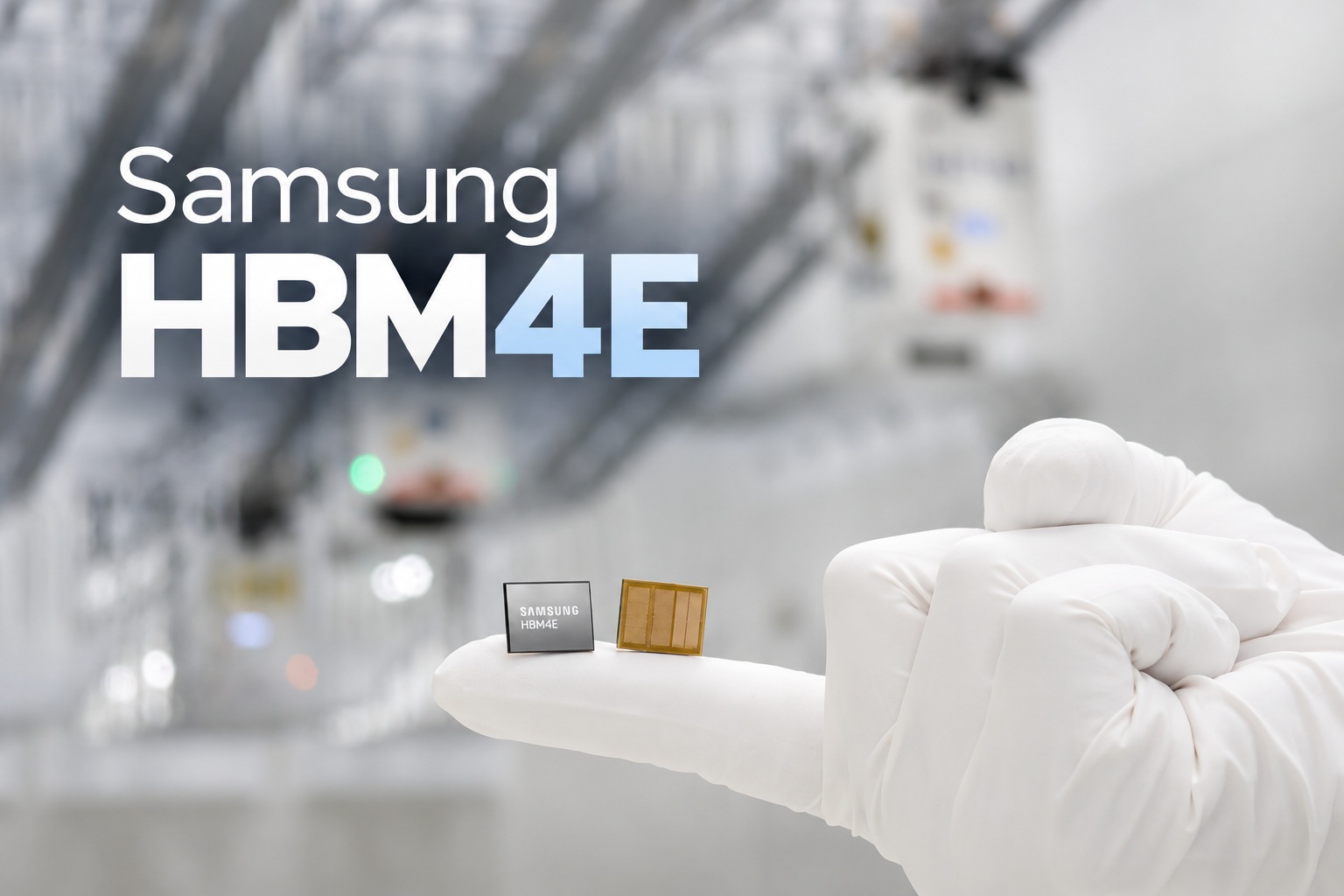
Samsung 12-Hi HBM4E: 3.6 TB/s Memory Reportedly Clears NVIDIA Testing, But Supply Questions Remain
The verdict
Passing qualification is a milestone, but without confirmed supply contracts or production schedules, this is a development to watch rather than a delivered product.
Enterprise pricing (undisclosed)
What slaps
- +48GB capacity per stack, 33% more than HBM4's 36GB
- +3.6 TB/s bandwidth represents meaningful 20%+ performance increase
- +Shares proven 1c DRAM and 4nm logic base with HBM4, potentially smoother production ramp
What stings
- −No confirmed supply contracts, volumes, or delivery dates despite passing qualification
- −Samsung declined to verify the qualification report publicly
- −Six-month lead over SK Hynix means little if production doesn't scale quickly
🚩 Before you buy
- !Samsung declined to publicly confirm the qualification report
- !No announced supply contracts, volumes, or production schedules
- !Samsung's track record in HBM has been inconsistent with past yield and qualification issues
Spec sheet
| Capacity per Stack | 48 GB (12-layer) |
| Pin Speed | 14 Gbps stable, scales to 16 Gbps |
| Bandwidth | 3.6 TB/s per stack |
| Manufacturing | 1c DRAM (10nm-class) + 4nm logic die |
| Energy Efficiency | 16% improvement vs HBM4 |
| Sample Shipment | May 2026 |
| Qualification Status | Reportedly passed (late September 2026) |
How it stacks up
| Product | Price | Key spec | Verdict |
|---|---|---|---|
| Samsung HBM4E (12-Hi) | Enterprise pricing | 48GB, 3.6 TB/s | Interesting |
| Samsung HBM4 (12-Hi) | Enterprise pricing | 36GB, ~3.0 TB/s | Buy (in production) |
| SK Hynix HBM3E | Enterprise pricing | 36GB, 1.15 TB/s | Buy (mature supply) |
The Qualification Milestone and What It Actually Means
Samsung's 12-layer HBM4E memory has reportedly passed qualification testing at NVIDIA and several major hyperscalers, according to Korean outlet Hankyung. The qualification allegedly completed in late September 2026, roughly four months after Samsung began shipping samples in May. For context, qualification is the process where customers evaluate whether hardware meets their performance, reliability, thermal, and specification requirements before committing to production orders.
Here's the catch: passing qualification does not equal secured supply. Samsung declined to confirm the report publicly, and there are no announced contract values, production volumes, or delivery schedules. This is a development milestone, not a shipping product. The technology is real and the performance claims are compelling, but the business outcome is still undecided.
Performance Specs: 3.6 TB/s and 48GB Per Stack
The 12-layer HBM4E stacks 48GB of capacity per unit, a 33% increase over HBM4's 36GB configuration. It operates at a stable 14 Gbps per pin and scales to 16 Gbps under load, delivering up to 3.6 TB/s of bandwidth per stack. Samsung claims this represents more than a 20% performance improvement over its HBM4 generation, which itself was a major step forward when mass production began in February 2026.
Under the hood, HBM4E uses Samsung's sixth-generation 10nm-class DRAM process (internally called 1c) combined with a 4nm logic base die produced by Samsung Foundry. This is the same manufacturing combination already deployed in HBM4, which matters for production ramp. Because the core process is proven rather than entirely new, the transition to mass production should theoretically be smoother than a ground-up redesign would allow.
Samsung also highlights a 16% improvement in energy efficiency through advanced low-power design techniques and optimized packaging. Thermal characteristics have been improved as well, two increasingly critical factors as AI accelerators push memory bandwidth and power requirements higher with each generation.
The Competitive Landscape: Samsung vs SK Hynix
Samsung began shipping HBM4E samples in May 2026, claiming at least a six-month lead over SK Hynix in the next-generation AI memory race. SK Hynix has been the dominant HBM supplier to NVIDIA for years, particularly with its mature HBM3E products that power current-generation AI accelerators like the H100 and H200. Samsung's early move with HBM4E is an attempt to close that gap and win back market share in the AI memory segment.
However, being first to sample or first to pass qualification does not guarantee market dominance. SK Hynix has established supply relationships, proven reliability at scale, and a track record of meeting NVIDIA's demanding production volumes. Samsung's challenge is not just technical qualification but demonstrating it can deliver at the scale and consistency required by hyperscalers running massive AI infrastructure.
| Memory Generation | Bandwidth per Stack | Capacity (typical high-end) | Status |
|---|---|---|---|
| HBM3E | ~1.15 TB/s | 36GB | Mature supply (SK Hynix) |
| Samsung HBM4 | ~3.0 TB/s | 36GB | Mass production (Feb 2026) |
| Samsung HBM4E | 3.6 TB/s | 48GB | Qualification reported (Oct 2026) |
What This Means for Next-Gen AI Accelerators
If Samsung secures production contracts, HBM4E would supply the next wave of AI GPUs from NVIDIA and potentially other accelerator vendors. The 3.6 TB/s bandwidth and 48GB capacity per stack are designed to feed the enormous data throughput requirements of large language models and other AI workloads that are memory-bandwidth-constrained rather than compute-constrained.
The timeline matters here. NVIDIA's next-generation Rubin architecture is expected in 2026 or early 2027, and memory supply commitments are typically locked in well ahead of GPU production ramp. Samsung's reported qualification in September 2026 positions it to compete for those contracts, but the window is narrow and SK Hynix is not sitting still.
The Red Flags: Unconfirmed Supply and Samsung's Track Record
Samsung has struggled in the HBM market despite being a memory manufacturing giant. It lost significant ground to SK Hynix in the HBM3 and HBM3E generations due to yield issues, qualification delays, and reliability concerns. While Samsung has made progress with HBM4, the company's credibility in this segment is still being rebuilt.
The fact that Samsung declined to confirm the qualification report raises questions. If this were a major commercial win, you would expect the company to announce it loudly. The silence suggests either the qualification is still subject to conditions, the contract terms are not yet finalized, or Samsung is being conservative about claims after past setbacks.
Who Should Care About This
If you are specifying hardware for AI infrastructure or tracking the AI supply chain, this is a development worth monitoring. HBM supply has been a bottleneck for AI accelerator production, and a credible second supplier would ease constraints and potentially improve pricing dynamics.
For investors and industry analysts, the key question is whether Samsung can convert technical qualification into commercial supply at scale. The company has the manufacturing capacity and the technology, but execution in HBM has been inconsistent.
Final Verdict: A Development to Watch, Not a Done Deal
Samsung's HBM4E passing NVIDIA qualification is a meaningful technical achievement, but it is not a guarantee of supply contracts or market share gains. The performance specifications are strong, the manufacturing approach is sound by using proven processes, and the timing could align with next-generation AI accelerator needs. However, until Samsung announces confirmed contracts, production volumes, and delivery schedules, this remains a promising development rather than a market-shifting event.
The AI memory race is far from over, and Samsung's ability to execute on HBM4E will determine whether it can reclaim lost ground from SK Hynix or remain a secondary player in the most critical memory segment for AI infrastructure.
Get it if
AI infrastructure planners, supply chain analysts, and enterprise buyers tracking memory supply diversification for next-gen AI accelerators.
Skip it if
You need confirmed product availability today or are looking for consumer-facing hardware. This is an enterprise component in development, not a retail product.
Enterprise pricing (undisclosed)
Affiliate links support the site at no cost to you.