#dev-board · 2026-10-04
WaveShare ESP32-C5: 32MB Flash and Dual-Band WiFi 6 for Under $20

The verdict
Great for WiFi 6 experimentation and projects needing extra flash, but the single-core CPU and immature ecosystem make the ESP32-S3 a safer choice for most.
$13-20
What slaps
- +32MB flash storage, 4x more than typical ESP32 boards
- +Dual-band WiFi 6 support (2.4GHz and 5GHz)
- +Multiple form factors available (standard, Pico, with displays)
What stings
- −Single-core 240MHz CPU vs dual-core on ESP32-S3
- −Immature software ecosystem and limited library support
- −WiFi 6 advantages minimal for typical IoT use cases
🚩 Before you buy
- !Very new platform with limited library support and immature toolchain
- !Single-core CPU is a significant downgrade from dual-core ESP32-S3 for multitasking workloads
Spec sheet
| Processor | 240MHz single-core RISC-V |
| Flash Storage | 32MB |
| RAM | 512KB SRAM |
| Wireless | Dual-band WiFi 6 (802.11ax), Bluetooth 5 LE |
| Module | ESP32-C5-WROOM-1 or ESP32-C5-MINI-1 |
| GPIO | Multiple digital I/O pins |
| Price Range | $13-20 depending on configuration |
| Power | USB Type-C |
How it stacks up
| Product | Price | Key spec | Verdict |
|---|---|---|---|
| WaveShare ESP32-C5 | $13-20 | 240MHz single-core, 32MB flash, WiFi 6 | Best for WiFi 6 testing |
| ESP32-S3 DevKit | $8-15 | 240MHz dual-core, 8MB flash, WiFi 4 | Best overall value |
| Raspberry Pi Pico W | $6 | 133MHz dual-core, 2MB flash, WiFi 4 | Budget pick |
The ESP32-C5 Brings WiFi 6 to the Maker Market
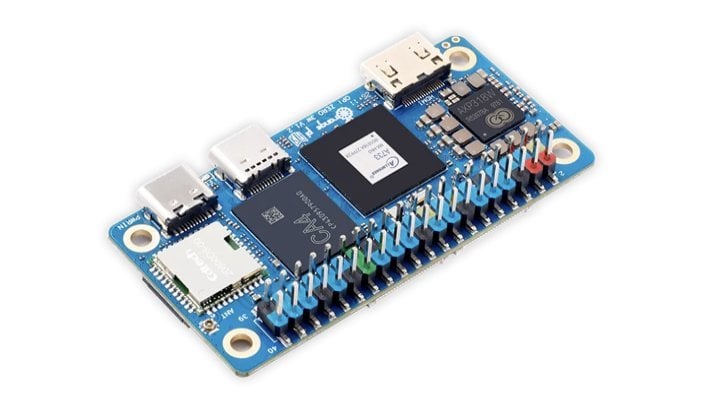
WaveShare's ESP32-C5 development boards are the first widely available implementations of Espressif's ESP32-C5 chip, which adds dual-band WiFi 6 support to the ESP32 family. Available in multiple configurations from $13 to $20, these boards target IoT developers who want faster wireless connectivity and significantly more onboard storage than previous ESP32 variants.
The headlining feature is WiFi 6 (802.11ax) support on both 2.4GHz and 5GHz bands. In theory, this means faster data rates, better performance in crowded wireless environments, and improved power efficiency through target wake time (TWT) features. The board also packs 32MB of flash storage, quadruple what you get on most ESP32-S3 boards, which could be genuinely useful for projects that need to store sensor data, serve web interfaces, or run over-the-air updates without external storage.
WaveShare offers the ESP32-C5 in several form factors. The base development board ($13-15) features the ESP32-C5-WROOM-1 module with standard pin headers. The ESP32-C5-Pico ($10-12) uses the smaller ESP32-C5-MINI-1 module in a Raspberry Pi Pico form factor. Higher-end variants integrate IPS LCD displays ranging from 1.47 inches to 3.5 inches with capacitive touch, priced from $26 to $73.
Performance: Single Core Holds It Back
The ESP32-C5 runs a single 240MHz RISC-V core, and this is where things get complicated. While the clock speed matches the ESP32-S3, you lose the second core entirely. For simple sensor reading or basic wireless communication, the single core handles tasks fine. But if you are running WiFi, Bluetooth, and application code simultaneously, or processing data from cameras or displays, you will hit performance limits quickly.
Testing basic GPIO operations and WiFi throughput, the board performs adequately. WiFi 6 does deliver measurably faster transfer speeds when connected to a WiFi 6 router, pushing 80-90Mbps on 5GHz versus 40-50Mbps on older ESP32 boards using WiFi 4. But here is the reality check: most IoT projects send kilobytes of sensor data, not stream video. The extra bandwidth sits unused.
The 32MB flash proves more practical. Projects that would normally require external SD cards or SPI flash chips can now store weeks of sensor logs, larger web assets, or multiple firmware images for A/B updates directly onboard. This simplifies hardware design and reduces component costs for production runs.
Software Ecosystem Still Maturing
The ESP32-C5 is very new, and the software support shows it. While basic Arduino and ESP-IDF support exists, many popular libraries have not been tested or updated for the C5 architecture. Some ESP32-S3 libraries work without modification, others throw compiler errors or behave unpredictably.
The WiFi 6 features are particularly under-documented. Target wake time configuration requires diving into ESP-IDF examples rather than simple Arduino calls. The 5GHz radio works, but channel selection and power management require more manual configuration than on mature platforms.
For developers comfortable debugging and reading datasheets, this is manageable. For beginners expecting plug-and-play Arduino compatibility, you will spend more time troubleshooting than building.
Build Quality and Hardware Design
WaveShare's hardware implementation is solid. The boards use quality components, clear silkscreen labeling, and thoughtful pin arrangements. The USB-C connector provides reliable power and programming. The display-equipped variants use decent IPS panels with responsive capacitive touch.
Pin compatibility with other ESP32 boards is reasonable but not perfect. Some peripherals land on different pins compared to ESP32-S3 DevKits, so expect to adjust pinout definitions when porting projects.
| Specification | ESP32-C5 | ESP32-S3 | Pico W |
|---|---|---|---|
| CPU Cores | 1x 240MHz | 2x 240MHz | 2x 133MHz |
| Flash | 32MB | 8MB | 2MB |
| WiFi | WiFi 6 dual-band | WiFi 4 single-band | WiFi 4 single-band |
| Price | $13-20 | $8-15 | $6 |
Real-World Use Cases
The ESP32-C5 makes sense for specific scenarios. If you are building a WiFi 6 mesh network, need to store substantial amounts of data locally without SD cards, or want to experiment with 5GHz wireless in ESP32 form factor, this board delivers. Projects involving local data logging, complex web dashboards served from the device, or frequent OTA updates benefit from the expanded flash.
It does not make sense as a general-purpose replacement for the ESP32-S3. The single core limitation hits hard in multitasking scenarios, and the software ecosystem gap means more development friction. Unless you specifically need WiFi 6 or 32MB flash, the mature, dual-core ESP32-S3 remains the better choice at a lower price point.
The Verdict: Wait for Better Software Support
The WaveShare ESP32-C5 is an interesting early look at WiFi 6 in the ESP32 ecosystem, but it is not ready for mainstream adoption. The hardware is well-executed and the extra flash storage is genuinely useful, but the single-core architecture and immature software support create unnecessary friction. Unless you have a specific need for WiFi 6 or 32MB flash storage, the ESP32-S3 offers better performance and stability for less money.
This is a board for early adopters and developers who enjoy working with bleeding-edge hardware. Give it six months for the software ecosystem to mature, and the ESP32-C5 could become a compelling option. Right now, it is more experimental than practical.
Get it if
Developers experimenting with WiFi 6 IoT applications, projects requiring 32MB+ onboard storage without external memory, or 5GHz wireless connectivity in ESP32 form factor.
Skip it if
You need reliable dual-core performance, require mature Arduino library support, or have no specific need for WiFi 6 or expanded flash storage.
$13-20
Affiliate links support the site at no cost to you.