the wire · #ai · 2026-09-03
Google's latest AI weather model gives you no excuse to forget your umbrella
Cech Tech Reviews
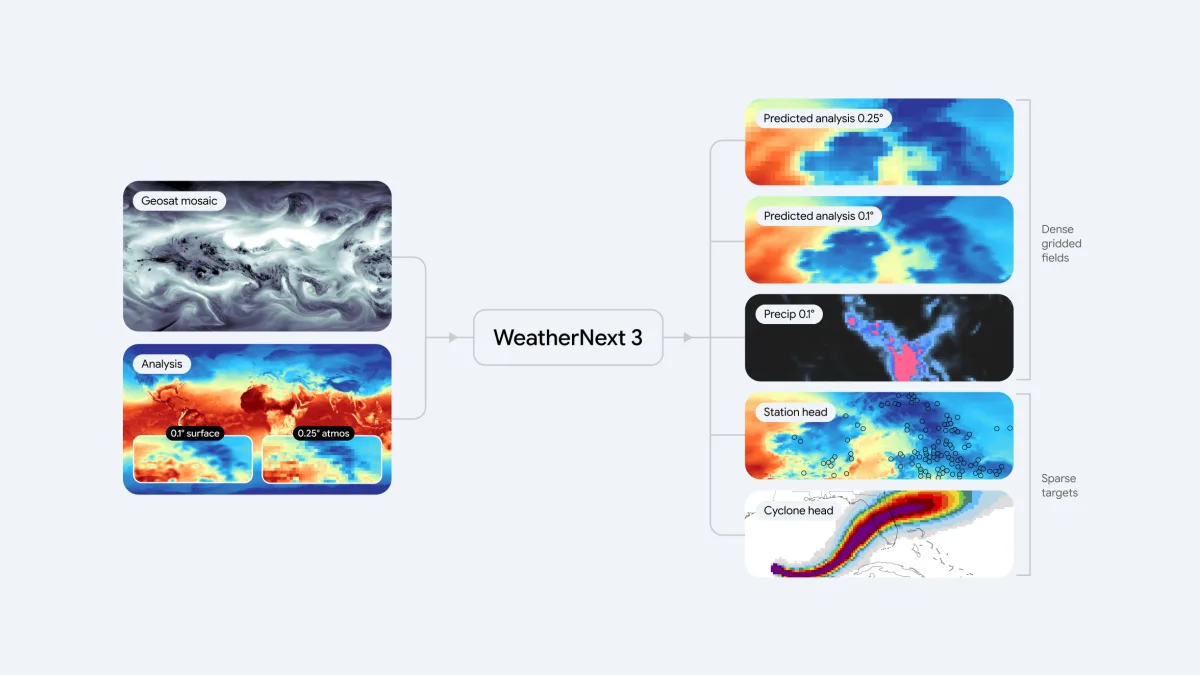
The way we interact with weather forecasts is undergoing a quiet but profound transformation. Google has unveiled WeatherNext 3, a new deep learning model that promises to deliver unprecedented accuracy in short-term predictions. According to recent reports, this technology is not just staying in the lab. It is being integrated directly into the tools you use every day, including Google Search, Maps, and the Gemini AI assistant.
This development signals a major shift in how meteorological data is processed and presented. Traditional weather models rely on complex physical equations that simulate the atmosphere. While powerful, they often struggle with rapid changes in local conditions. Deep learning models like WeatherNext 3 learn from vast historical datasets to identify patterns that human analysts might miss. This allows for faster and more nuanced predictions, especially for sudden weather events.
The integration into Google Maps is particularly significant for everyday users. Imagine checking your commute and seeing a precise rain probability for your specific street rather than a broad city-wide forecast. This level of granularity helps people make better decisions about their daily routines. You no longer need to guess if you should carry an umbrella based on a general regional report.
For entrepreneurs and professionals, this shift highlights the growing importance of AI in operational planning. Logistics companies, event planners, and outdoor service providers can now rely on more accurate short-term forecasts. This reduces risk and improves efficiency. The ability to predict weather changes with higher precision can save millions in operational costs and improve customer satisfaction.
The inclusion of WeatherNext 3 in Gemini also underscores the role of AI assistants in curating personalized information. Instead of just providing raw data, Gemini can now offer contextual advice based on your location and schedule. This represents a move toward proactive AI that anticipates user needs rather than just responding to queries. It transforms weather from a static fact into a dynamic part of your daily workflow.
However, this advancement also raises questions about data privacy and reliance on proprietary algorithms. As more critical decisions are delegated to AI models, transparency becomes crucial. Users and businesses need to understand the limitations and potential biases of these systems. Trust in AI-driven predictions will depend on consistent accuracy and clear communication about how these models work.
What this means for you is that you should start leveraging these enhanced features in your daily planning. Use Gemini to ask for hyper-local weather advice tailored to your specific activities. For example, try this prompt: "Based on my current location and the 24-hour forecast, what is the best time to schedule an outdoor team lunch to avoid rain?" This simple workflow can help you make more informed decisions and reduce the stress of unexpected weather changes.
Reporting basis: original story
← back to The Wire