the wire · #ai · 2026-07-09
Google will now tell you if an ad was made with AI
Cech Tech Reviews
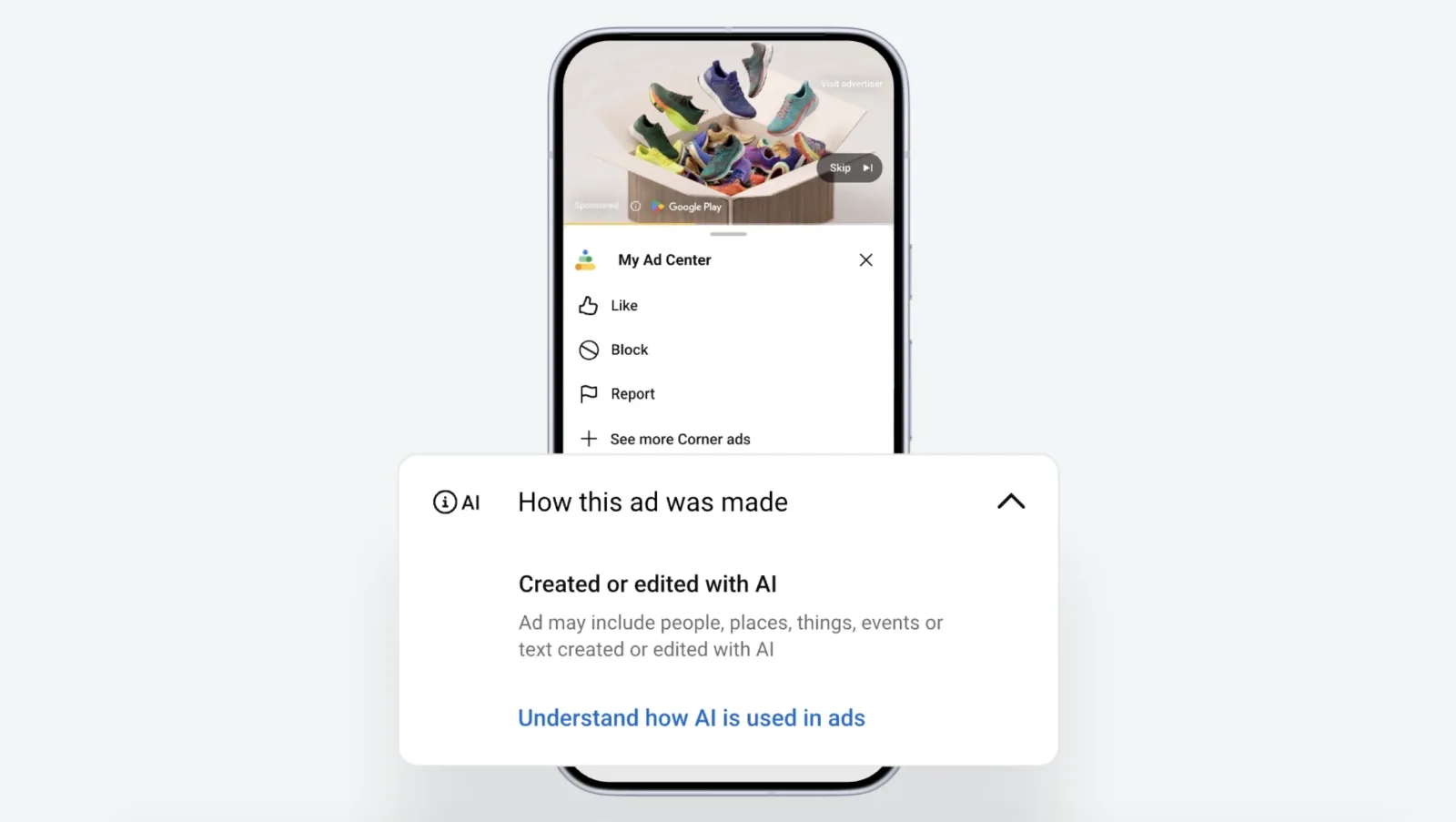
Google is adding a new transparency layer to its ad ecosystem, according to TechCrunch. In the updated My Ad Center, users can tap the three‑dot menu or info icon on any ad and see a "created or edited with AI" label under a dedicated tab that explains how the ad was made.
The label appears automatically for ads built with Google’s own generative AI advertising suite. For ads that were crafted with third‑party AI tools, the label must be added by the advertiser manually. This dual approach reflects Google’s confidence in its internal AI stack while still holding external creators to the same disclosure standard.
The feature rolls out across Google Search, Google Discover and YouTube, meaning the majority of consumer‑facing ad placements will now carry an AI provenance tag. In regions where regulatory pressure on AI disclosures is higher, Google says the label will be displayed more prominently, though the exact regional rollout details were not disclosed.
Why does this matter? As AI‑generated copy and visuals become cheaper and faster to produce, the line between human‑crafted and machine‑crafted ads is blurring. Advertisers can spin up campaign assets at scale, but without clear labeling, users may be left guessing about authenticity, potentially eroding trust.
From a broader industry perspective, Google’s move aligns with a wave of disclosure mandates from governments and platforms alike. The EU’s AI Act and recent US proposals are pushing for similar transparency, and the ad space is one of the most visible front‑lines for these policies. By embedding the label directly in the user interface, Google is pre‑empting stricter regulation while also positioning itself as a responsible steward of AI.
For marketers, the update introduces an operational step: they must audit any AI‑generated assets that didn’t originate in Google’s toolbox and add the label manually. This could add a small compliance overhead, but it also encourages a habit of documenting AI usage, which may become a best practice as AI tools proliferate.
What this means for you: if you rely on AI assistants to draft ad copy or create visuals, make sure you can trace the source and flag it appropriately. A quick workflow is to include a “metadata” field at the end of every AI‑generated asset that notes the tool used and a compliance checkbox. You can even automate the label insertion with a simple script.
Ready‑to‑use prompt: "When generating ad copy with an AI assistant, add a line at the end that says ‘Created with [ToolName], AI‑generated’ and export the text as a .txt file ready for manual upload to My Ad Center."
Reporting basis: original story
← back to The Wire