the wire · #ai · 2026-08-27
Hugging Face’s new robot is an adorable rollerskating duck
Cech Tech Reviews
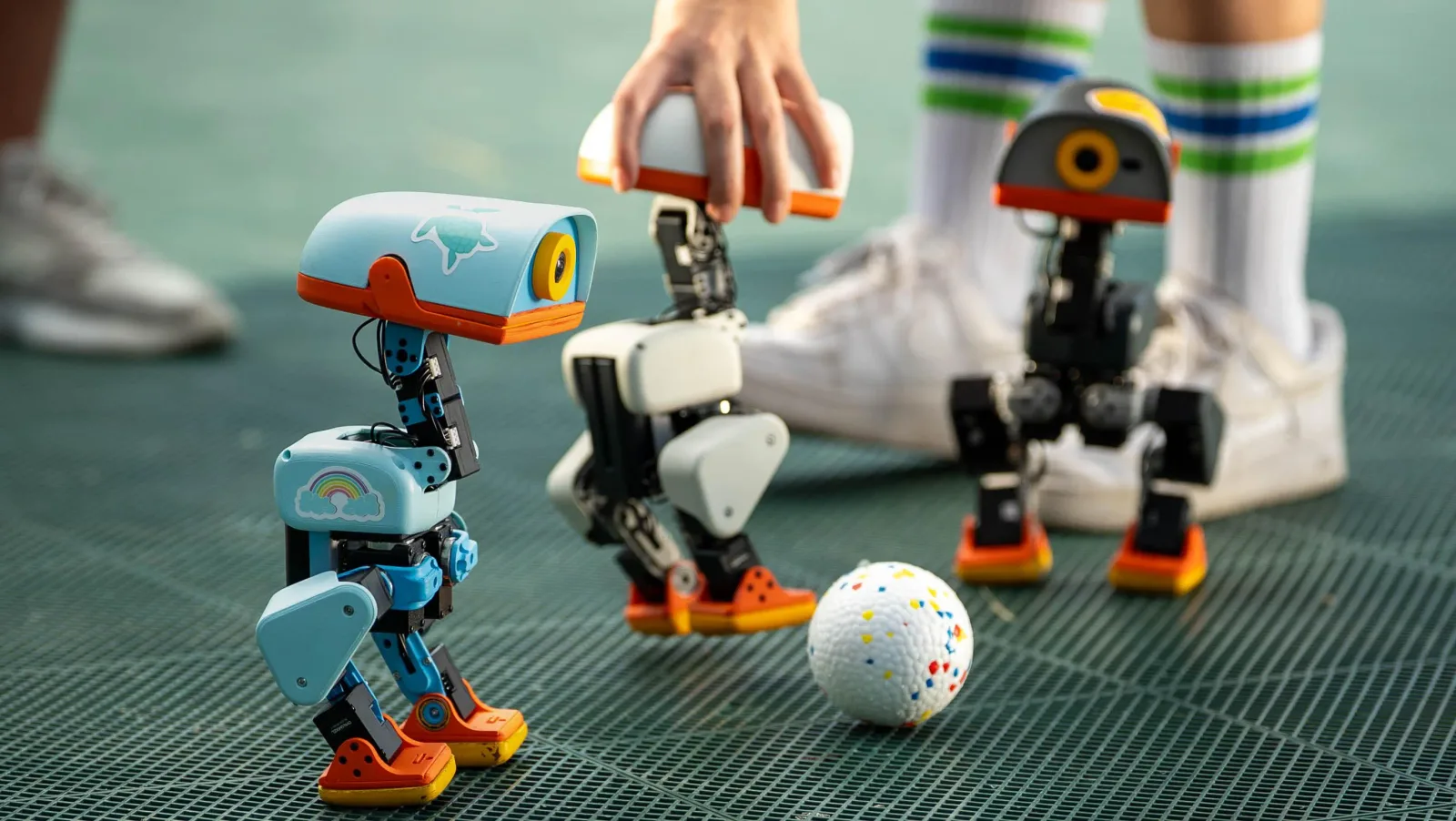
Hugging Face is making a playful but significant move into the physical AI arena with the launch of the Microduck. According to The Verge, Pollen Robotics, their robotics subsidiary, has introduced this adorable one-eyed biped that stands just under ten inches tall. It is not just a toy. It represents a strategic push to democratize access to advanced robotic hardware for developers and hobbyists alike.
The Microduck is available for preorder at $399 and comes in four distinct colors including cream, graphite, lavender, and sky blue. While the price point is accessible for enthusiasts, the shipping timeline is notably distant. Pollen Robotics plans to start shipping units before Christmas 2026, which suggests a long development cycle or perhaps a deliberate strategy to build anticipation and refine the supply chain over time.
What makes this device particularly interesting for the AI community is its demonstrated capabilities. Video demos show the duck picking up socks and markers, kicking a ball, and zipping around on tiny rollerskates. These are not simple pre-programmed tricks. They require real-time computer vision and complex motor control algorithms that must adapt to dynamic environments.
The robot can react to its surroundings and even follow a laser pointer. Users can also control it manually using a game controller. This dual-mode operation allows for both autonomous exploration and direct human intervention. It provides a flexible platform for testing different interaction models without requiring extensive custom hardware modifications.
The most critical aspect for AI professionals is that the Microduck’s software is open-source. This aligns perfectly with Hugging Face’s core mission of fostering a collaborative AI ecosystem. By providing the code alongside the hardware, they are inviting the community to experiment, improve, and build upon the existing foundation. This transparency is rare in the robotics industry where proprietary systems often dominate.
This move highlights a broader trend where AI companies are moving beyond pure software solutions to integrate with the physical world. As large language models become more capable, the need for embodied AI that can interact with real objects becomes increasingly important. The Microduck serves as a low-cost entry point for researchers to test these theories in a controlled but realistic setting.
For developers and AI enthusiasts, this is a signal to start preparing your environments. The long lead time means you have ample opportunity to study the open-source codebase and plan your experiments. It also suggests that the barrier to entry for robotics research is lowering significantly.
What this means for you: If you are working on computer vision or reinforcement learning projects, this is a tangible platform to test your algorithms. Instead of simulating everything, you can deploy your models on real hardware. Try using an AI assistant to help you parse the open-source documentation for the Microduck. Ask it to summarize the key API endpoints for motor control and vision processing so you can start building your integration strategy early.
Reporting basis: original story
← back to The Wire