the wire · #ai · 2026-08-22
Inherent, founded by DeepMind alumni, says its AI ‘teammate' just outperformed Anthropic and OpenAI at replicating research
Cech Tech Reviews
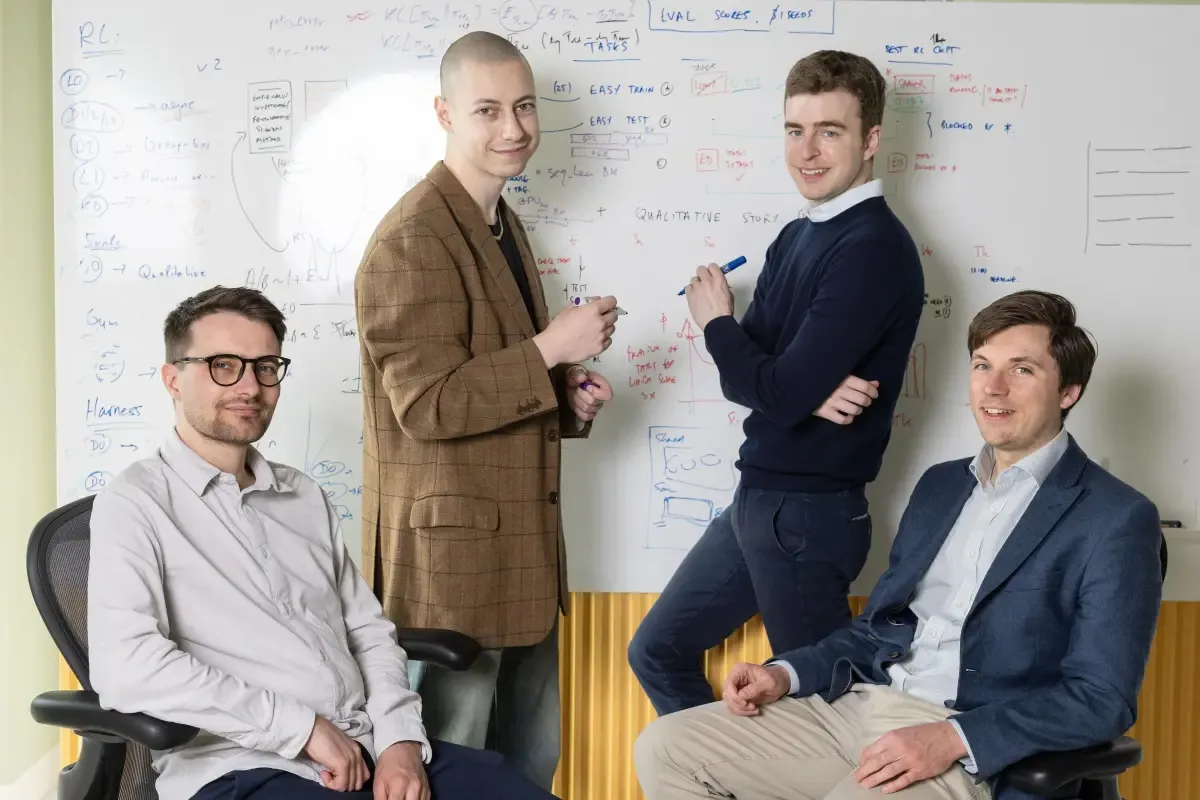
The landscape of artificial intelligence is shifting from merely generating text to executing complex, verifiable scientific tasks. According to TechCrunch, Inherent AI, a British lab founded by DeepMind alumni, has released an agent named Faraday. This system is designed to replicate scientific research papers with a level of precision that rivals or exceeds outputs from Anthropic and OpenAI. This is not just another chatbot update. It represents a fundamental change in how we approach computational science.
Faraday operates as an autonomous teammate rather than a passive tool. It does not simply summarize existing knowledge or hallucinate plausible sounding conclusions. Instead, it engages in the rigorous process of reproducing experimental results. This capability addresses one of the biggest crises in modern science. The reproducibility crisis has long plagued academic and industrial research. AI agents that can verify these results offer a potential solution to this persistent problem.
The comparison to industry giants like Anthropic and OpenAI is significant. These companies have dominated the conversation around large language models. Their strength has traditionally been in creative writing, coding assistance, and general reasoning. Inherent AI is challenging this dominance by focusing on a niche that requires extreme accuracy. They are proving that specialized agents can outperform generalist models in specific, high-stakes domains.
This development suggests that the next wave of AI innovation will be driven by verification. We are moving past the era where AI is judged solely on its ability to sound convincing. The new metric for success is whether the AI can actually do the work. This shift will likely accelerate the adoption of AI in fields like drug discovery, materials science, and physics. These industries cannot afford errors. They need systems that guarantee reproducibility.
For researchers and data scientists, this means a new workflow is emerging. You will no longer just ask an AI to draft a hypothesis. You will ask it to validate your experimental design. Faraday acts as a critical peer reviewer that never sleeps. It can cross-reference methodologies and identify subtle flaws in logic or execution. This reduces the time spent on manual verification and allows humans to focus on higher level strategic decisions.
The implications for entrepreneurship in the AI space are profound. Startups that build tools around verification and replication will likely find more stable demand than those focused on content generation. The market is saturated with creative tools. There is a growing hunger for reliable, scientific-grade AI assistants. Inherent AI is positioning itself at the forefront of this demand by leveraging its DeepMind heritage.
What this means for you is that your relationship with AI is evolving from creative collaboration to scientific partnership. You should start integrating verification steps into your own research or data analysis workflows. Do not trust the first output. Use AI to challenge your assumptions and replicate your findings. Try this prompt with your AI assistant to test its reasoning capabilities: "Analyze the following experimental methodology for potential sources of bias or reproducibility errors and suggest three specific controls to improve the validity of the results." This simple step can significantly enhance the rigor of your work.
Reporting basis: original story
← back to The Wire