the wire · #topnews · 2026-06-29
NASA's X-59 "frankenjet" tests supersonic flight without the sonic boom
Cech Tech Reviews
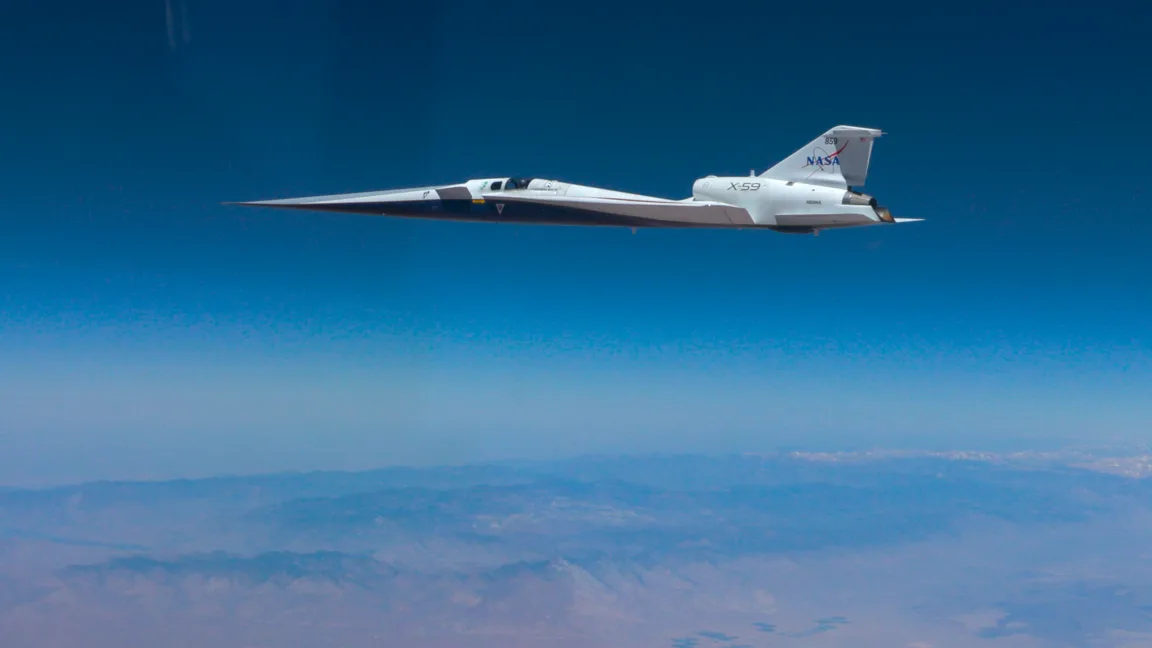
The era of silent supersonic travel may be closer than we thought. According to Ars Technica, NASA’s X-59 Quesst has successfully completed supersonic test flights. This marks a significant milestone more than two decades after the Concorde retired from service. The aircraft is designed to replace the jarring sonic boom with a sound comparable to a car door slamming shut from twenty feet away.
This engineering feat is not just about noise reduction. It is about regulatory change. Current aviation laws strictly prohibit supersonic flight over land due to the destructive potential of sonic booms. If the X-59 can prove its quietness is consistent and safe, it could pave the way for future airliners to fly faster than the sound of sound over populated areas.
The design of the X-59 is radically different from traditional jets. Lockheed Martin built it with a long, slender nose and specific wing shapes to manage shockwaves. These shockwaves are what create the loud boom. By spreading the pressure waves out, the aircraft creates a softer acoustic signature. This is a major shift from the blunt force of older supersonic designs.
What makes this project unique is its public engagement strategy. Most experimental X-planes stay in restricted airspace near Edwards Air Force Base. NASA plans to fly the X-59 across the United States. Residents in various towns will hear the quiet thump and provide feedback. This data is crucial for defining what the public considers acceptable noise levels for supersonic travel.
Jim Less, a NASA test pilot, highlighted the robustness of the X-59. He noted that unlike typical bare-bones experimental planes, this aircraft is built for extensive data gathering. It needs to be reliable enough to tour the country and collect consistent acoustic data. This level of durability is essential for convincing regulators and airlines to invest in the technology.
The implications for the travel industry are profound. Faster overland flights could reduce travel times significantly. A trip from New York to Los Angeles could potentially take under three hours. This would compete directly with high-speed rail and change the economics of business travel. Airlines would need to redesign cabins and operations to support these new aircraft.
For AI professionals, this story illustrates the power of simulation and data-driven design. The X-59’s shape was likely optimized using advanced computational fluid dynamics. AI models can now predict acoustic signatures with high precision. This allows engineers to test thousands of designs virtually before building a single prototype. It accelerates innovation in complex physical systems.
What this means for you: Use AI to simulate complex systems in your own work. Whether you are optimizing logistics or designing products, leverage machine learning to predict outcomes before physical testing. Try this prompt with your AI assistant: "Analyze the trade-offs between speed and noise in transportation systems. Suggest three ways AI can optimize acoustic signatures in vehicle design based on current engineering principles."
Reporting basis: original story
← back to The Wire