the wire · #topnews · 2026-09-03
Scientists Have Found the Most Convincing Evidence Yet of a Dark Matter Particle
Cech Tech Reviews
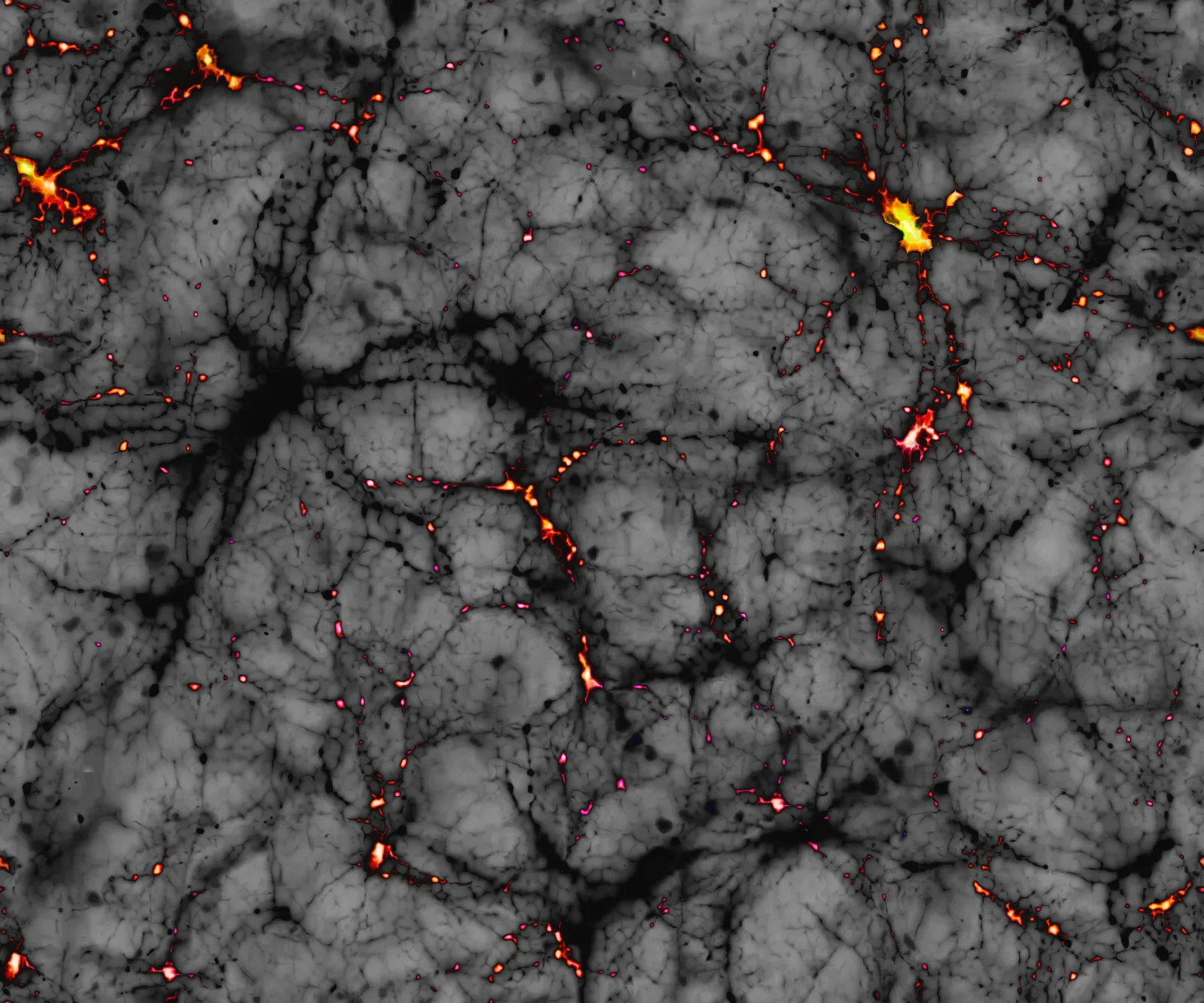
The hunt for dark matter has long been a frustrating exercise in chasing shadows. For decades, physicists have relied on indirect observations of gravitational effects to infer the existence of this invisible substance. Now, according to recent reports, scientists believe they have found the most convincing evidence yet of a dark matter particle. This development marks a significant shift from theoretical speculation to tangible, albeit small, experimental data.
The discovery centers on an underground detector that recorded a strange interaction. These detectors are typically buried deep beneath the earth to shield them from cosmic rays and other background noise. The signal captured was subtle, but its characteristics align closely with predictions for certain types of dark matter candidates. It is not a definitive confirmation, but it is a promising lead that warrants serious attention from the scientific community.
What makes this finding particularly interesting is the nature of the interaction itself. The data suggests a particle with properties that signify dark matter, such as weak interaction with normal matter. This aligns with the WIMP hypothesis, which posits that dark matter consists of Weakly Interacting Massive Particles. While other experiments have seen similar signals, none have been as statistically significant or consistent as this latest result.
The implications for computational physics are profound. If this signal holds up under further scrutiny, it could validate decades of theoretical work. Researchers will need to refine their models to account for this specific particle behavior. This could lead to more accurate simulations of galaxy formation and the large-scale structure of the universe. The integration of this new data into existing frameworks will be a complex task.
From an AI and data analysis perspective, this is a goldmine for machine learning applications. The sheer volume of data required to filter out background noise and identify such faint signals is immense. AI algorithms are already being used to sift through this data, but this new finding may require even more sophisticated pattern recognition. Developers can explore how neural networks can be trained to detect similar anomalies in other scientific datasets.
This breakthrough also highlights the importance of interdisciplinary collaboration. Physicists, data scientists, and engineers must work together to interpret these results. The next steps will involve independent verification by other experiments. Until then, the scientific community will remain cautiously optimistic. The potential for a paradigm shift in our understanding of the cosmos is real.
What this means for you: If you work with large datasets or complex simulations, consider how AI can help identify subtle patterns that human analysts might miss. You can try using an AI assistant to analyze public scientific datasets, such as those from CERN or other particle physics labs, to see if you can replicate or extend these findings. Here is a prompt to get started: "Analyze this dataset of particle collision events and identify any anomalies that deviate from the standard model predictions, focusing on low-energy interactions."
The road ahead is long, but this is a step in the right direction. The universe is full of mysteries, and each clue brings us closer to understanding its true nature. Whether this leads to a Nobel Prize or a new era of physics remains to be seen. One thing is certain, the intersection of technology and science continues to drive discovery forward.
Reporting basis: original story
← back to The Wire