the wire · #topnews · 2026-10-08
A Scientist Working on the ‘IceCube’ Neutrino Detector Explains the Nobel Prize-Winning Technology
Cech Tech Reviews
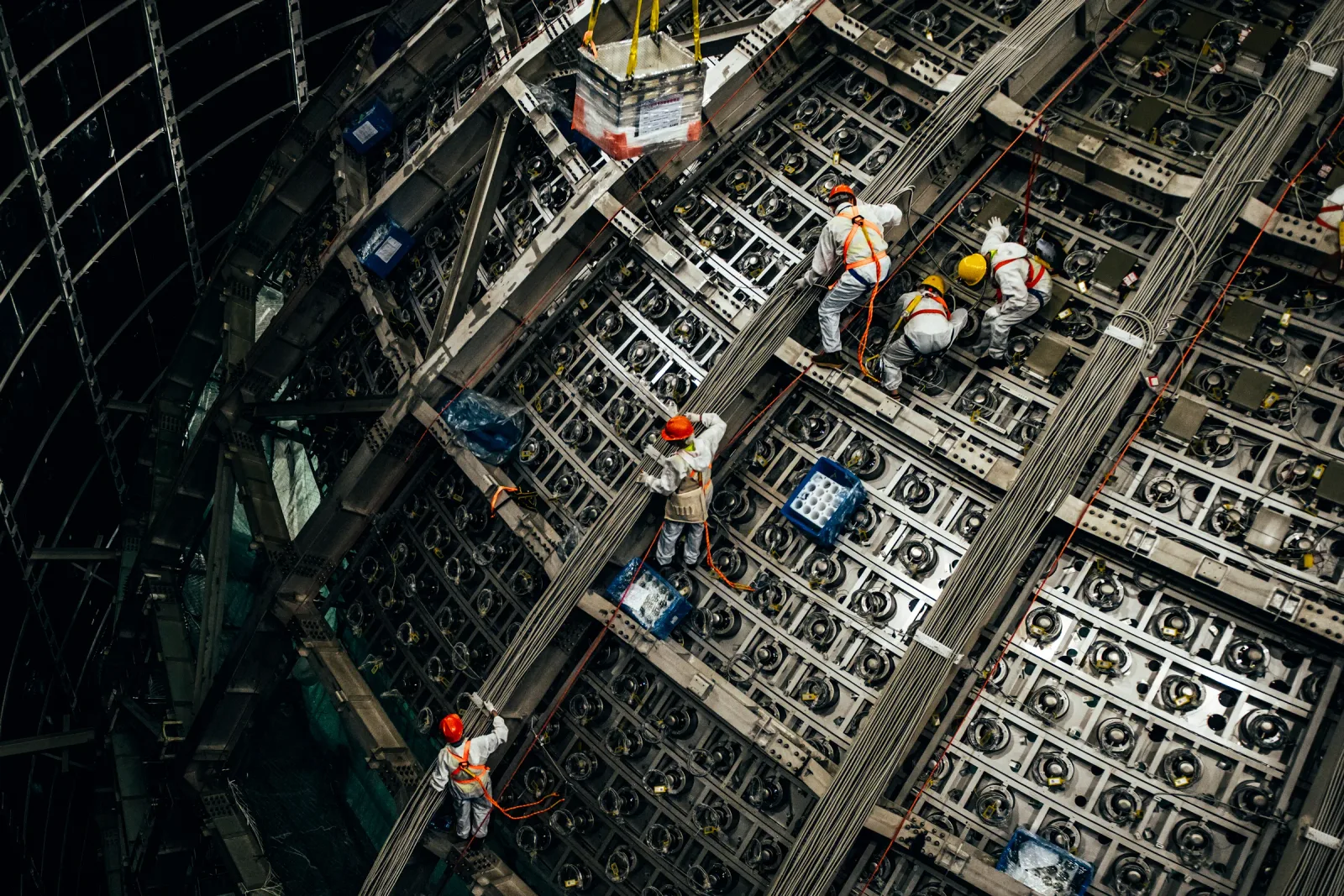
The recent Nobel Prize recognition for the IceCube Neutrino Observatory has brought a spotlight to one of the most ambitious scientific instruments ever built. Juan Carlos Díaz Vélez, a key scientist involved in the project, recently broke down the sheer magnitude of the challenge involved in detecting these elusive particles. His explanation offers a fascinating glimpse into how humanity is learning to listen to the universe in ways we never could before.
Detecting a neutrino is effectively like looking for a needle in a haystack. These subatomic particles are incredibly abundant yet interact so weakly with matter that they pass through us and the Earth constantly without leaving a trace. The IceCube detector at the South Pole is designed to capture these rare interactions, turning an almost impossible task into a manageable scientific endeavor through sheer scale and ingenuity.
The solution to this detection problem lies in the deep Antarctic ice. Researchers embedded thousands of optical sensors deep within the ice sheet to create a massive three-dimensional detector. When a neutrino occasionally collides with an atom in the ice, it produces a faint flash of blue light. This Cherenkov radiation is what the sensors capture, allowing scientists to reconstruct the path and energy of the original particle.
This approach highlights a broader trend in modern science where the volume of data is as critical as the theoretical framework. The IceCube experiment generates petabytes of data, much of which is noise. Filtering this noise to find the genuine signals requires sophisticated algorithms and computational power. It is a perfect example of how physics and computer science are now inextricably linked.
For AI enthusiasts, this is a compelling case study in pattern recognition at scale. The challenge of identifying a specific signal amidst a vast background of cosmic rays and other interference mirrors many problems in machine learning. Techniques used to train models on noisy datasets can be directly applied to refining the sensitivity of these scientific instruments.
The implications for AI development are significant. As we push the boundaries of what we can observe in the cosmos, we are also pushing the limits of our data processing capabilities. The methods developed for IceCube could inform how we handle large-scale sensor data in other fields, from climate monitoring to autonomous vehicle navigation.
What this means for you is that the techniques used in high-stakes scientific discovery are becoming increasingly relevant to everyday AI applications. You can start by exploring how noise reduction algorithms work in your own data projects. Try using an AI assistant to analyze a noisy dataset and identify patterns that are not immediately obvious. Here is a prompt you can use: "Analyze this dataset for outliers and suggest a filtering method to reduce noise while preserving key signals."
The work of scientists like Díaz Vélez reminds us that some of the most profound discoveries require us to look in the most unexpected places. The Antarctic ice may seem like a remote and harsh environment, but it is becoming a crucial window into the fundamental nature of our universe. This intersection of extreme environments and advanced technology is where the next wave of innovation will likely emerge.
Reporting basis: original story
← back to The Wire