the wire · #topnews · 2026-10-08
Life Is Asymmetric. The Scientists Who Figured Out Why Won the 2026 Nobel Prize in Chemistry
Cech Tech Reviews
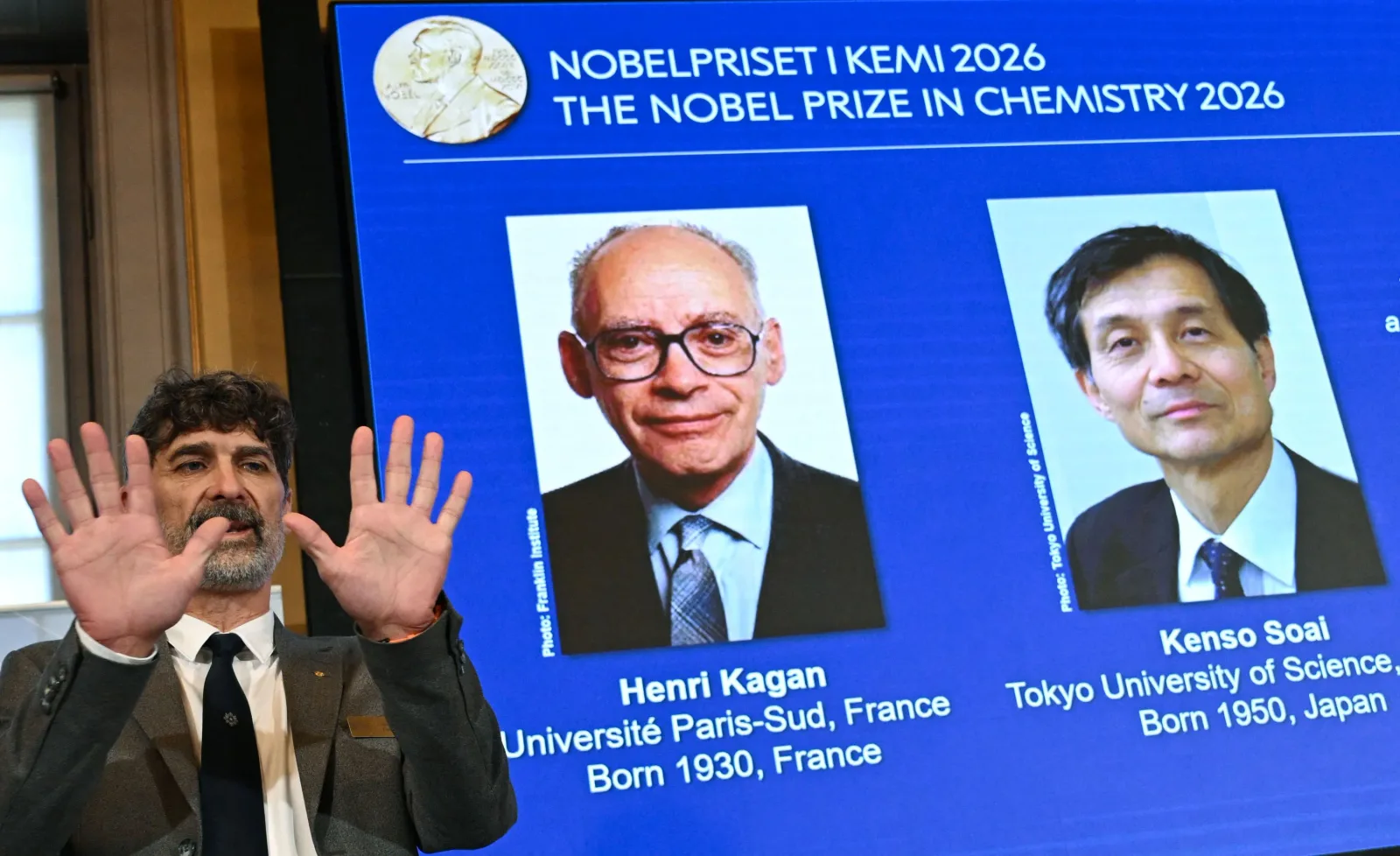
The 2026 Nobel Prize in Chemistry has been awarded to Henri Kagan and Kensō Soai for their groundbreaking work in asymmetric synthesis. This achievement highlights a fundamental challenge in chemistry that has persisted for over a century. Molecules often exist in mirror-image forms known as enantiomers. These forms have identical physical properties but behave differently in biological systems. The prize recognizes the scientists who figured out how to control this asymmetry with precision.
According to reporting on the award, Henri Kagan developed a method to create chiral catalysts. These catalysts act as templates that guide chemical reactions to produce only one specific mirror image. This approach transformed the field by making it possible to synthesize complex molecules efficiently. Before this innovation, chemists often had to separate unwanted mirror images through tedious and wasteful processes. Kagan’s work provided a cleaner and more elegant solution to this problem.
Kensō Soai took this concept further with a discovery that seemed almost magical. He found a reaction that could amplify a tiny initial imbalance into a dominant single form. This phenomenon, known as asymmetric autocatalysis, means that a small amount of one mirror image can trigger the production of more of itself. This self-reinforcing mechanism is crucial for understanding the origins of life. It suggests how biological homochirality might have emerged from a chaotic prebiotic soup.
The implications for the pharmaceutical industry are profound. Many drugs are chiral molecules where one mirror image is therapeutic and the other is inactive or harmful. The thalidomide tragedy in the late 1950s serves as a stark reminder of why this matters. One form treated morning sickness while its mirror image caused severe birth defects. Modern drug development relies heavily on the techniques pioneered by Kagan and Soai to ensure safety and efficacy.
Beyond medicine, this technology impacts materials science and agriculture. Chiral compounds are used in agrochemicals to create more effective pesticides with lower environmental impact. They are also essential in the production of advanced polymers and liquid crystals. The ability to control molecular handedness allows engineers to design materials with specific optical and mechanical properties. This precision is becoming increasingly important as we move toward more complex nanotechnology applications.
The broader trend in chemistry is shifting from simply making molecules to making them with exact spatial control. This shift is driven by the need for sustainability and efficiency. Traditional synthesis methods often generate significant waste. Asymmetric catalysis reduces this waste by producing only the desired product. It aligns with the principles of green chemistry by minimizing resource consumption and environmental harm.
For AI researchers and tech professionals, this Nobel Prize offers a subtle but important lesson. It demonstrates how understanding fundamental physical constraints can lead to massive technological leaps. Just as asymmetric synthesis solved a chemical bottleneck, AI is solving bottlenecks in data processing and pattern recognition. The key is finding the right catalyst or algorithm that amplifies the desired outcome while suppressing noise.
What this means for you is that precision in design is becoming a competitive advantage. Whether you are building software or physical products, controlling the variables that lead to specific outcomes is critical. You can apply this mindset to your AI workflows by focusing on prompt engineering that guides the model toward a single desired output format. Try using a prompt that forces the AI to evaluate its own output for consistency before finalizing it. This mimics the self-correcting nature of asymmetric autocatalysis in a digital context.
Reporting basis: original story
← back to The Wire