the wire · #ai · 2026-09-18
AI is feared globally as the destroyer of jobs
Cech Tech Reviews
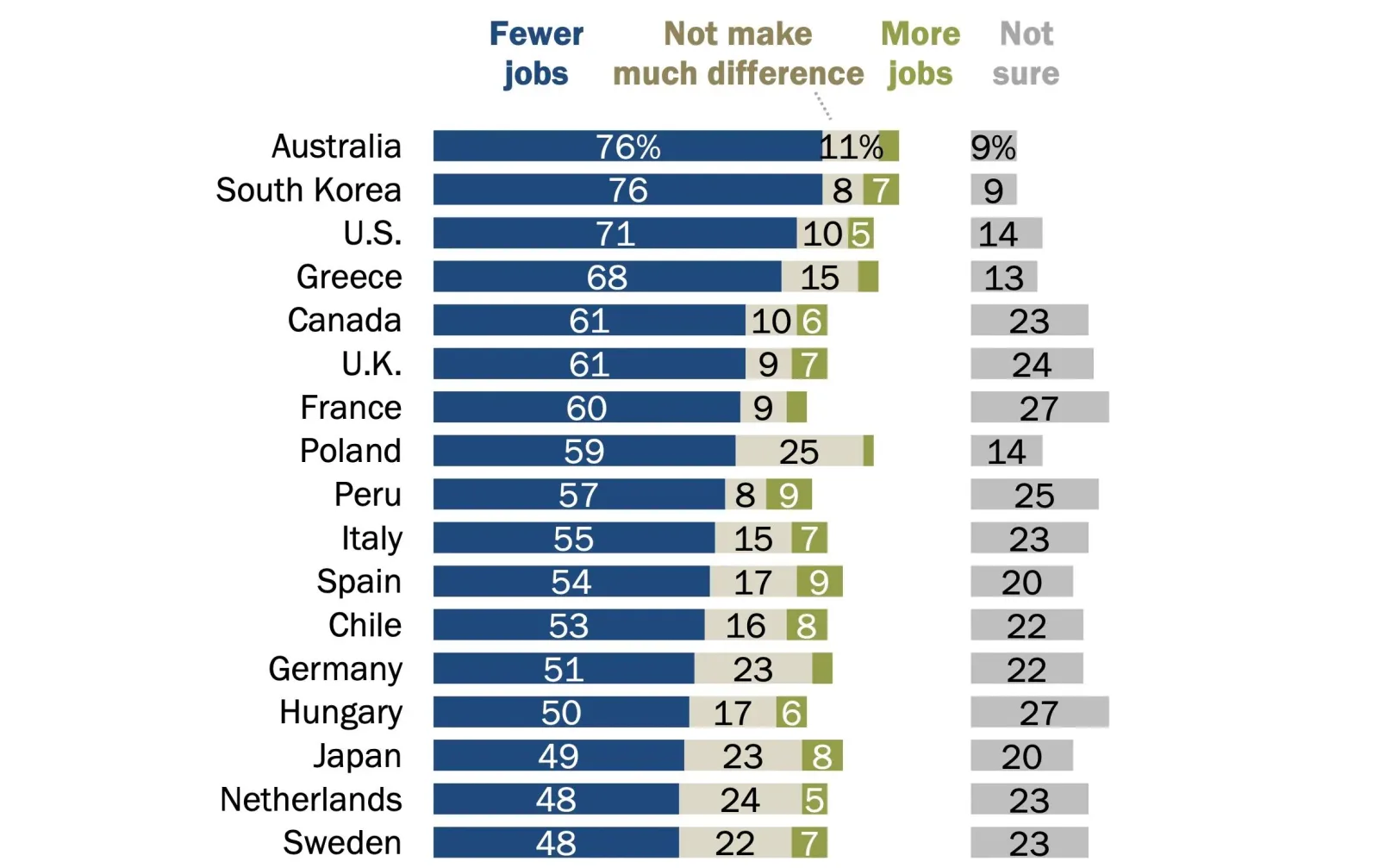
The narrative around artificial intelligence has shifted from cautious optimism to genuine apprehension. According to a massive new survey by Pew Research, the world is largely convinced that AI will dismantle the labor market rather than rebuild it. This data comes from 42,151 respondents across 37 countries, collected well before the recent wave of apocalyptic warnings dominated the headlines.
The findings are stark and consistent. In 34 of the 37 countries surveyed, people are more likely to believe AI will lead to job losses over the next two decades. This is not a marginal view. It represents a dominant sentiment that challenges the tech industry's usual pitch about augmentation and efficiency. The fear is not just about robots taking over factories. It is about algorithms replacing white collar work.
Worry is particularly intense in wealthier nations. Australia and South Korea both sit at 76 percent of respondents fearing job loss. The United States is not far behind at 71 percent. This correlation with wealth is interesting. It suggests that as economies become more service and knowledge based, the perceived threat to human labor grows. The very jobs that drive these economies are the ones most exposed to automation.
This data adds a crucial layer to the current discourse. We often hear about the potential for AI to create new industries. Yet the public is looking at the immediate horizon and seeing disruption. The gap between the long term economic theory of new job creation and the short term reality of displacement is widening. This disconnect fuels the anxiety seen in the survey results.
The timing of this report is significant. It was collected before the most recent high profile warnings from industry leaders. This means the fear is not just a reaction to recent hype. It is a deep seated concern that has been building for years. People are watching the technology evolve and feeling the uncertainty in their own careers.
We need to look at what this means for the workforce. The data suggests that trust in AI as an economic engine is low. For businesses and policymakers, this is a major hurdle. You cannot implement AI strategies effectively if the workforce is resistant due to fear. The social license for AI adoption is being eroded by these very real concerns.
What this means for you: If you are using AI tools in your work, you must address the human element. Do not just focus on efficiency. Focus on how AI supports your role rather than replacing it. Communicate clearly with your team about how these tools are meant to augment your skills. Try this prompt with your AI assistant to reframe your workflow: "Analyze my current daily tasks and identify which ones are repetitive and low value. Suggest three ways I can use AI to automate these specific tasks so I can focus on high impact strategic work." This shifts the narrative from fear to empowerment.
Reporting basis: original story
← back to The Wire