the wire · #topnews · 2026-10-29
Astronomers Discover a Possible New Dwarf Planet in Our Solar System
Cech Tech Reviews
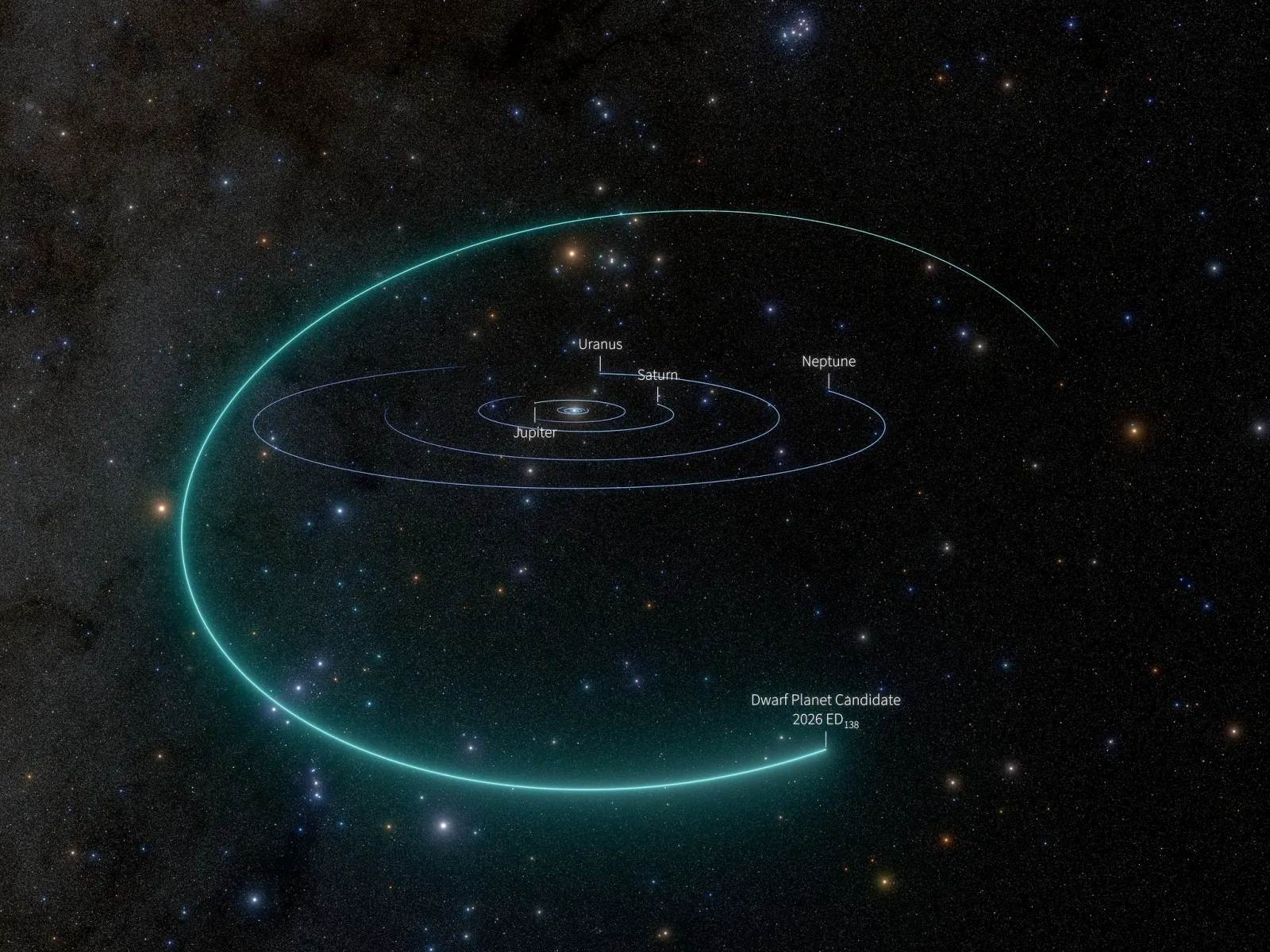
Astronomers have recently pointed their instruments toward the dark, cold edges of our solar system and found something intriguing. The object in question is designated 2026 ED138. It is currently being evaluated for its status as a potential new dwarf planet. This discovery adds another layer of mystery to the Kuiper Belt region beyond Pluto.
The size of 2026 ED138 is quite impressive for an object in this remote zone. Estimates suggest it could have a diameter of up to 1,500 kilometers. To put that in perspective, that is large enough to be a significant celestial body in its own right. It is not just a small rock drifting through the void. This scale places it in the same league as other known dwarf planets.
However, the scientific community is not ready to declare victory just yet. Researchers are still working to confirm whether 2026 ED138 meets all the strict criteria for dwarf planet classification. The process involves precise measurements of its orbit and physical properties. Until those data points are solid, it remains a candidate rather than a confirmed member of the club.
This discovery is not just about adding a name to a list. It reflects a broader trend in how we explore the outer solar system. Modern astronomical surveys are becoming more sensitive and comprehensive. They are capable of detecting faint objects that were previously invisible to us. This technological leap is crucial for understanding the full scope of our cosmic neighborhood.
From an AI perspective, this kind of discovery is fascinating. The sheer volume of data generated by modern telescopes is overwhelming. Human astronomers cannot process every pixel and light curve manually. Machine learning algorithms are becoming essential tools for sifting through this noise. They help identify anomalies and potential candidates like 2026 ED138 with greater speed and accuracy.
The implications for future exploration are significant. If 2026 ED138 is confirmed, it will change our understanding of the Kuiper Belt's structure. It may also influence plans for future spacecraft missions. Understanding the distribution and size of these objects helps us plan trajectories and study the early solar system's formation.
What this means for you is that the boundary between data science and astronomy is blurring. As AI tools become more sophisticated, they will play a larger role in scientific discovery. You can leverage similar principles in your own work by using AI to identify patterns in large datasets. Try using an AI assistant to analyze a large set of unstructured data for outliers. Ask it to summarize the key anomalies and suggest potential causes for further investigation. This workflow can help you spot opportunities or risks that might otherwise go unnoticed.
Reporting basis: original story
← back to The Wire