the wire · #topnews · 2026-07-24
One of NASA’s Most Important Deep Space Observatories Hit by Spanish Wildfires
Cech Tech Reviews
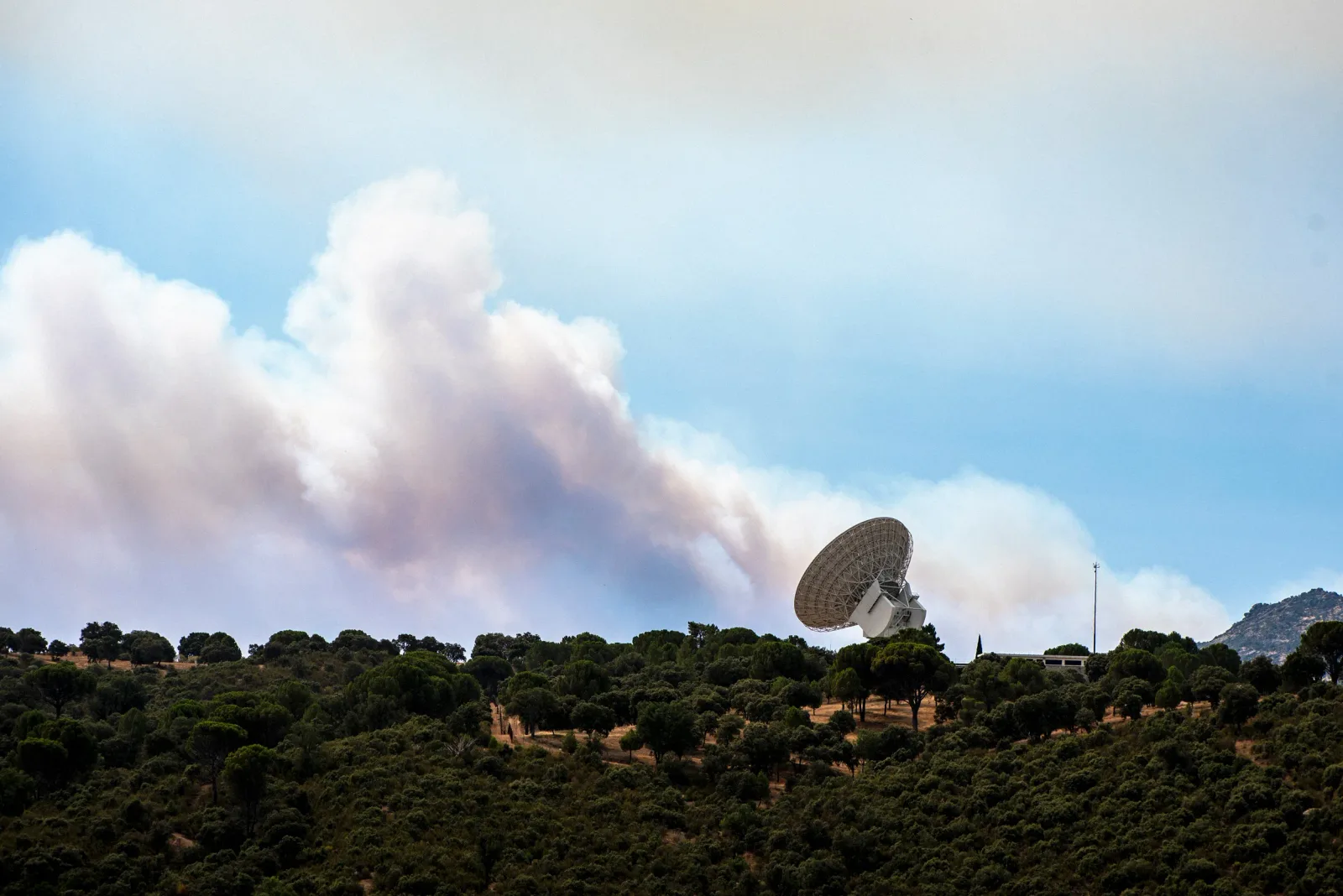
According to recent reports, a devastating wildfire has swept through the region surrounding Madrid, Spain, directly impacting one of NASA’s most vital pieces of infrastructure. The flames have burned through the Deep Space Communications Complex, a facility that serves as a crucial node in the agency’s global network for communicating with distant spacecraft. This is not just a local incident but a potential blow to the continuity of deep space exploration efforts.
The situation remains fluid and dangerous, with NASA currently unable to send teams to the site to assess the damage. A wildfire emergency grips the region, making physical inspection impossible at this time. This lack of immediate visibility creates a significant operational blind spot for mission controllers who rely on this complex for real-time data and command transmission.
The Deep Space Network is a worldwide array of giant radio antennas that support interplanetary spacecraft missions. It also provides radio and radar astronomy observations for the exploration of the solar system and the universe. The Madrid complex, in particular, provides coverage for spacecraft in the southern hemisphere and helps ensure continuous communication as the Earth rotates.
Disruptions to this network can have cascading effects on ongoing missions. Whether it is a rover on Mars, a probe near Jupiter, or a satellite in deep orbit, any loss of contact can delay critical scientific data or even jeopardize mission safety. The inability to assess the damage means that contingency plans must be activated immediately to reroute communications through other available stations.
This incident highlights the fragility of our technological infrastructure when faced with extreme climate events. As wildfires become more frequent and intense due to changing weather patterns, the resilience of critical scientific assets becomes a pressing concern. It is a stark reminder that even the most advanced space programs are tethered to the physical realities of our home planet.
For AI and tech professionals, this serves as a potent case study in infrastructure risk management. It underscores the importance of distributed systems and redundant pathways in critical operations. The reliance on specific geographic locations for key functions can create single points of failure that are vulnerable to environmental shocks.
What this means for you: As we integrate more AI-driven systems into critical infrastructure, we must design for resilience against physical disruptions. Consider implementing automated failover protocols and distributed data processing that do not rely on a single physical location. You can try this workflow with your AI assistant: Ask it to help you draft a risk assessment checklist for your own critical digital tools, focusing on geographic redundancy and automated backup triggers in case of physical site inaccessibility.
Reporting basis: original story
← back to The Wire