the wire · #topnews · 2026-10-01
2 Driverless Cars Crashed Going 155 mph. That Could Be a Good Thing
Cech Tech Reviews
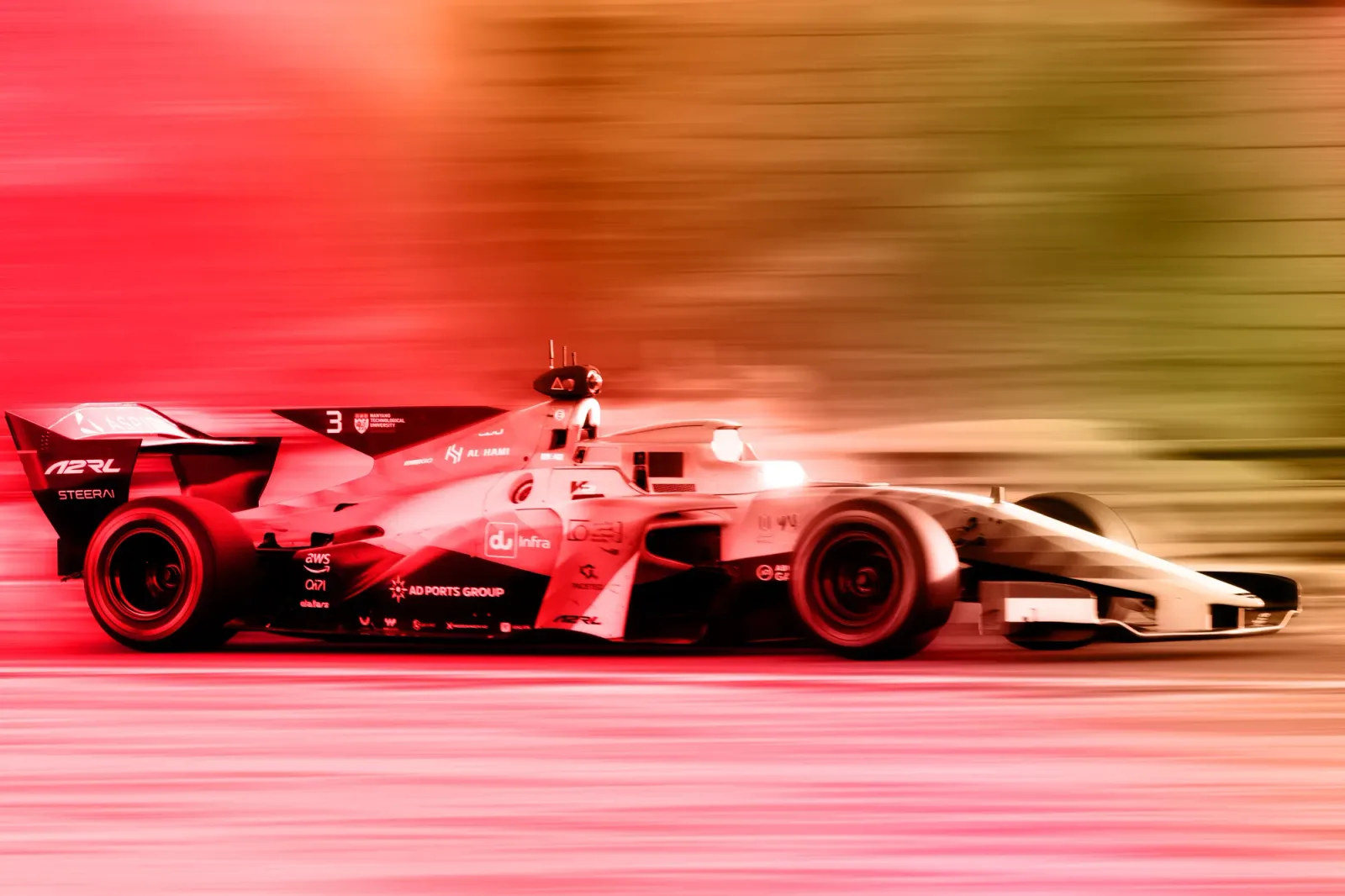
Two driverless race cars slammed into barriers at 155 mph during a recent autonomous racing challenge on a Formula 1 track, and honestly, that might be the most useful thing that happened all day. Only two of the five competing vehicles made it to the finish line, exposing hard limits in how AI systems handle extreme speed, blind corners, and sudden sensor failures.
This wasn't a cautious parking lot demo. These were purpose-built autonomous race cars pushing the edge of what computer vision and real-time decision-making can handle when physics gets unforgiving. The crashes happened exactly where you'd expect them to: tight corners with limited sensor visibility, where the AI had milliseconds to decide between braking, steering, or plowing into a wall.
Why crashes at 155 mph might actually be progress: they expose failure modes you'd never find in controlled tests. Autonomous systems perform beautifully in predictable environments, but racing forces them into scenarios where sensor data is ambiguous, predictions fail, and there's no time for the cautious fallback behaviors that work on public roads. Every crash is a dataset that shows where the AI's mental model breaks down.
The three failures point to a broader challenge across AI development. Systems trained in simulation often miss edge cases that only appear in the real world under stress. High-speed racing compresses those edge cases into minutes instead of millions of miles, making it a forcing function for better perception models, faster inference, and more robust failure handling.
This also highlights the gap between assisted and fully autonomous systems. Even Tesla's Full Self-Driving and other advanced driver aids rely on a human ready to take over. In racing, there is no takeover. The AI either handles the corner or it doesn't, and the crashes prove we're still in the "doesn't" phase more often than the industry would like.
What this means for you: if you're building or deploying AI systems in high-stakes environments, racing failures are a reminder to red-team your models against worst-case scenarios, not just average performance. Stress-test with corrupted inputs, timing failures, and conflicting sensor data.
Try this prompt with your AI assistant: "I'm building an AI system for [your domain]. What are five edge cases or failure modes I might not have considered, especially under time pressure or degraded input quality? For each, suggest a simple test I could run." It won't prevent every crash, but it might help you find the blind corners before they find you.
Reporting basis: original story
← back to The Wire