the wire · #global · 2026-07-31
How the Pro-Trump Media Ecosystem Is Splintering Ahead of the Midterms
Cech Tech Reviews
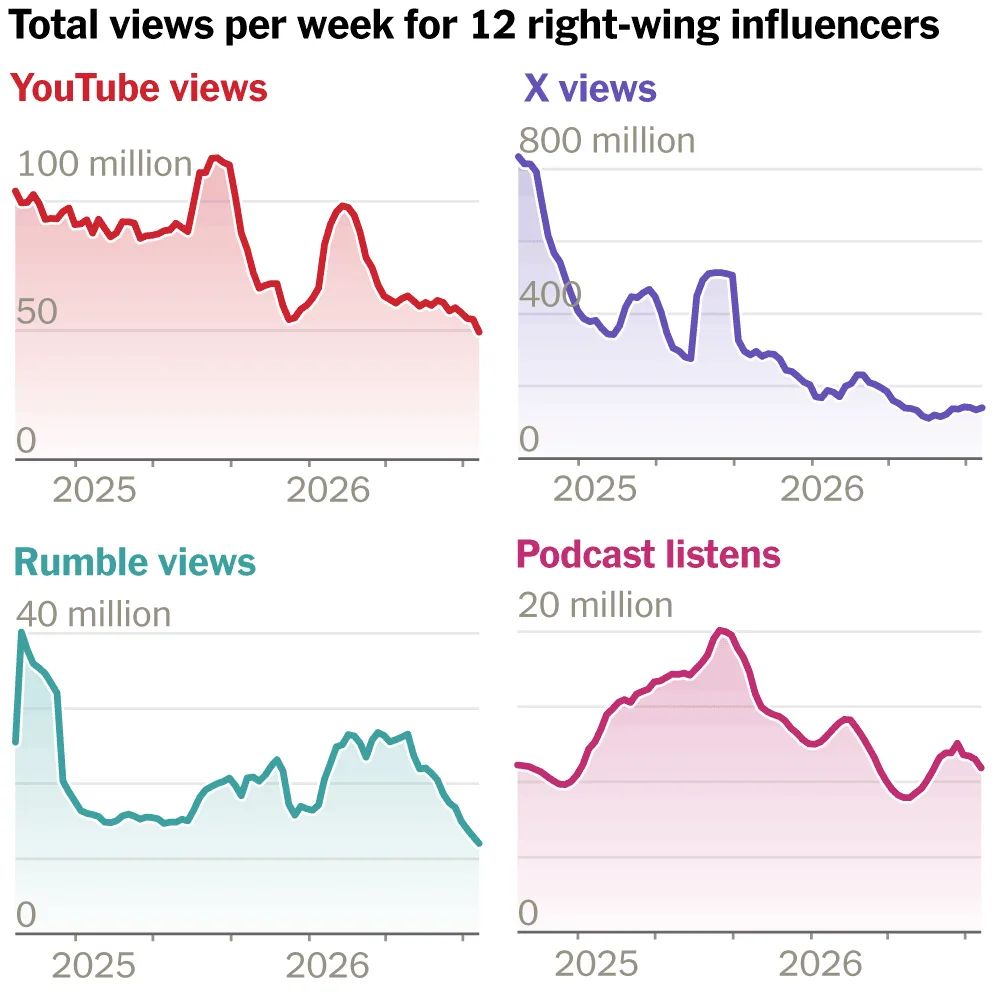
The once-monolithic wall of support surrounding President Trump is showing significant cracks, according to recent reporting on the state of conservative media. What was previously a unified front of right-wing influencers is now dissolving into a chaotic landscape of public feuds and declining viewership. This fragmentation presents a complex challenge for the Republican Party as they prepare for the upcoming midterm elections.
For years, the strategy relied on a synchronized message that amplified specific narratives across various platforms. Now, that coordination is breaking down as individual personalities prioritize their own brand equity over party unity. The result is a noisy environment where conflicting messages dilute the overall impact of Republican advocacy.
According to industry observers, this splintering is not just a matter of ego but a structural issue within the influencer economy. Creators are increasingly competing for the same limited attention span of their audience. This competition often leads to aggressive tactics and public disputes that alienate segments of the base rather than mobilizing them.
The loss of viewership is a critical metric for these media figures. When influencers lose their audience, they lose their leverage and their ability to sway public opinion. This decline suggests that the audience is becoming fatigued by the constant conflict and is seeking more coherent or less polarizing content.
For the Republican Party, this fragmentation means that reaching a cohesive voter base is becoming more difficult. Campaigns can no longer rely on a single narrative to drive engagement. Instead, they must navigate a fragmented media landscape where different influencers are pulling in different directions.
This trend mirrors broader shifts in the digital media landscape where niche communities are forming around specific viewpoints. The era of broad, unified media consumption is giving way to an age of hyper-specific, often contradictory, content streams. This makes it harder for any single political message to dominate the conversation.
The implications for political strategy are profound. Parties must now invest more resources in managing these diverse and often hostile media relationships. The cost of maintaining unity is rising, and the return on investment for unified messaging is decreasing.
What this means for you: If you are using AI tools to monitor public sentiment or manage social media campaigns, you need to account for this fragmentation. Instead of tracking a single narrative, you should analyze multiple micro-communities. Try this prompt with your AI assistant: "Analyze the recent social media activity of these five conservative influencers and identify the key points of contention that are causing audience fragmentation. Suggest three strategies to address these conflicts in a political communication plan." This will help you understand how to navigate a divided media landscape effectively.
Reporting basis: original story
← back to The Wire