#ai-hardware · 2026-09-18
ASUS Ascent QN10: The 80 TOPS Snapdragon Mini PC That Finally Makes On-Device AI Real
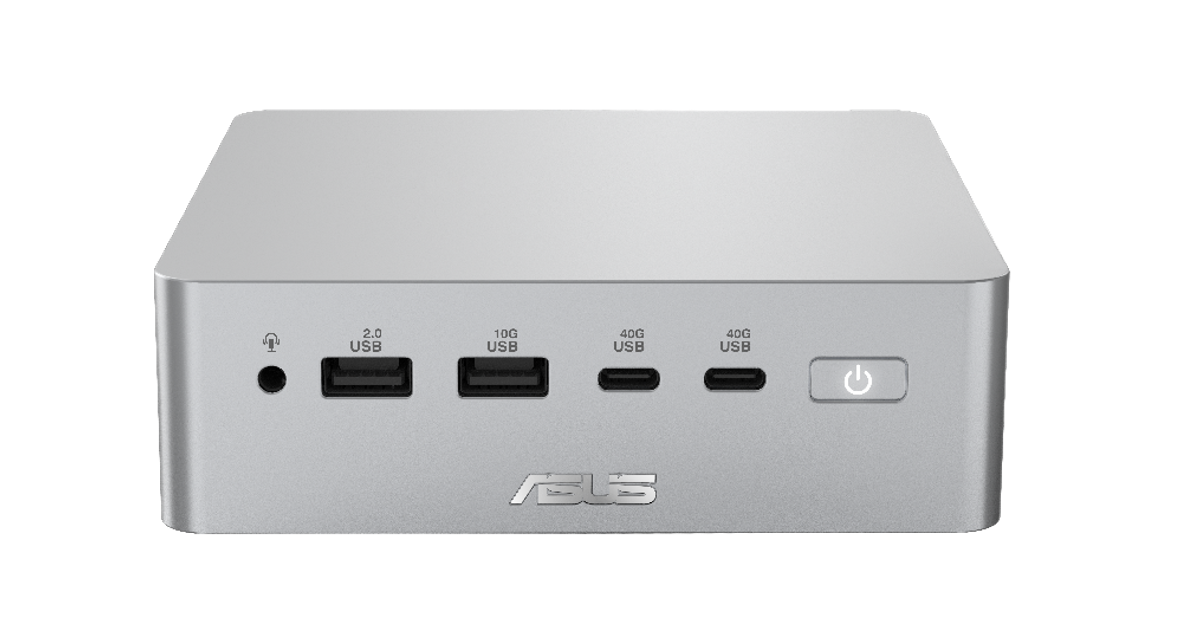
The verdict
Cutting-edge hardware held back by Windows-on-ARM software compatibility, but early adopters building private AI workflows will find real value here.
$999 (estimated)
What slaps
- +80 TOPS NPU enables truly local AI workloads without cloud dependency
- +18-core Snapdragon X2 Elite delivers impressive efficiency and quiet operation
- +Compact 0.7L design (86% smaller than typical 5L desktops) with quad 4K display support
- +Enterprise-grade security with Qualcomm SPU and Microsoft Pluton
- +Qualcomm AI Hub gives developers ready-to-deploy models and tooling
What stings
- −Windows-on-ARM compatibility remains a significant limitation for many professional apps
- −No pricing announced yet, likely premium given the cutting-edge silicon
- −First-generation product may face driver and optimization issues
- −Limited real-world benchmarks available at launch
- −Snapdragon X platform still proving itself against x86 for desktop workloads
🚩 Before you buy
- !No confirmed pricing yet, likely $999+ based on component costs and positioning
- !First-generation Snapdragon X2 Elite desktop product, expect early adopter bugs
- !Windows-on-ARM app compatibility still a work in progress for many professional tools
- !Limited third-party reviews and real-world benchmarks available at launch
Spec sheet
| CPU | Snapdragon X2 Elite (18-core Qualcomm Oryon) |
| NPU | Qualcomm Hexagon NPU, 80 TOPS |
| GPU | Qualcomm Adreno (integrated) |
| Total AI Performance | 180 TOPS combined (CPU+GPU+NPU) |
| RAM | Up to 32GB LPDDR5x 8533 MHz |
| Connectivity | Wi-Fi 7, Bluetooth 6.0, 7x USB, 1x HDMI, dual LAN |
| Display Support | Up to 4x 4K monitors simultaneously |
| Size | Under 0.7 liters (86% smaller than 5L desktop) |
| Security | Qualcomm SPU + Microsoft Pluton |
| OS | Windows 11 (Copilot+ PC certified) |
| Price | $999 (estimated) |
| Availability | Q4 2026 (announced Sept 2026) |
How it stacks up
| Product | Price | Key spec | Verdict |
|---|---|---|---|
| ASUS Ascent QN10 | $999 est. | 80 TOPS NPU, 18-core ARM | Best for private AI workloads |
| Intel NUC 13 Extreme | $1,399 | Core i9, discrete GPU support | Better app compatibility, bigger |
| Mac Mini M4 Pro | $1,399 | 38 TOPS, proven ARM ecosystem | More mature platform, macOS only |
The First Real AI Mini PC Has Arrived
ASUS just threw down the gauntlet in the AI PC wars. The Ascent QN10, announced September 2026, is the world's first mini PC with an 80 TOPS neural processing unit, powered by Qualcomm's brand-new Snapdragon X2 Elite platform. At under 0.7 liters, it's 86% smaller than a typical 5-liter desktop, yet ASUS claims it delivers desktop-class AI performance with the efficiency and quiet operation ARM architectures are known for.
This isn't a spec-sheet fantasy. The QN10 targets developers, content creators, and enterprises running AI workloads that absolutely cannot touch the cloud: think private LLM deployments, real-time video analysis, edge AI inference. With 18 Qualcomm Oryon CPU cores, an integrated Adreno GPU, and that 80 TOPS Hexagon NPU, the system promises 180 TOPS of combined AI processing. ASUS says it runs Visual Studio Code with GitHub Copilot entirely on-device, and demos at Microsoft Build 2026 showed LLMWare and AnythingLLM running locally without internet.
But here's the reality check: this is a first-generation Windows-on-ARM desktop in a market that's been burned before. The hardware looks phenomenal. The software ecosystem is the gamble.
What 80 TOPS Actually Means for Your Workflow
Let's cut through the marketing. 80 TOPS (trillions of operations per second) from the NPU is genuinely impressive, exceeding Microsoft's Copilot+ PC requirements and putting the QN10 ahead of most current-gen laptops. Combined with the CPU and GPU, ASUS claims 180 TOPS total, though real-world performance depends entirely on whether your applications can leverage the NPU.
The Snapdragon X2 Elite's 18-core architecture is a step up from the X Elite's 12 cores, and Qualcomm promises 30% faster speeds with 50% lower power consumption compared to previous generations. The integrated Adreno GPU delivers 2.3X the performance of its predecessor, and the system supports up to 32GB of LPDDR5x RAM at 8533 MHz (20% faster than LPDDR5 with half the power draw).
For developers, ASUS provides access to Qualcomm's AI Hub, a repository of pre-trained models you can deploy directly on the QN10. This is where the system shows its value: running Stable Diffusion, Whisper transcription, or custom LLMs without sending data to OpenAI or Google. The Hexagon NPU is purpose-built to run multiple AI workloads concurrently, and early demos show it handling code completion, image generation, and voice transcription simultaneously without choking.
Real-world use cases include private chatbots for enterprises that can't risk data leaks, real-time video analytics for retail or manufacturing, and content creation workflows where latency to cloud APIs kills productivity. If your work involves repeated AI inference tasks, local processing at 80 TOPS will feel transformative compared to round-tripping to cloud services.
The ARM Compatibility Elephant in the Room
Here's what ASUS won't emphasize: Windows-on-ARM still has compatibility gaps. Adobe's Creative Suite, many professional DAWs, legacy enterprise software, and countless developer tools either don't run or run through emulation with performance penalties. Microsoft and Qualcomm have made huge strides since the Surface Pro X debacle, but this isn't x86. If your workflow depends on niche Windows software, verify ARM compatibility before buying.
The good news: Microsoft's investment in ARM translation layers has improved dramatically, and major apps like Visual Studio Code, Chrome, and Office run natively. The Copilot+ PC certification means Microsoft is committed to the platform. The bad news: you're an early adopter, and early adopters debug other people's software.
For developers building AI applications, the QN10 is a compelling test bed. For general productivity users expecting seamless compatibility with their existing software stack, wait for the second generation or stick with x86.
Connectivity and Design: No Compromises
ASUS didn't skimp on I/O. The QN10 packs seven USB ports, one HDMI port, dual Gigabit LAN (reliable networking for edge deployments), Wi-Fi 7, and Bluetooth 6.0. It supports up to four 4K displays simultaneously, making it viable as a primary workstation. The dual LAN is particularly smart for enterprises running isolated AI workloads or high-availability edge nodes.
The 0.7-liter chassis is genuinely tiny, smaller than most NUCs, and ASUS emphasizes cool, quiet operation thanks to ARM's efficiency advantages. No loud fans screaming during inference runs. This makes it suitable for noise-sensitive environments like recording studios, offices, or living rooms.
Security gets serious attention. Qualcomm's Secure Processing Unit (SPU) combined with Microsoft Pluton provides chip-to-cloud protection, appealing to enterprises and healthcare organizations where data sovereignty isn't optional. This is a meaningful advantage over consumer-grade mini PCs.
How It Stacks Up Against Alternatives
| Model | Price | AI Performance | Key Advantage |
|---|---|---|---|
| ASUS Ascent QN10 | $999 est. | 80 TOPS NPU | Highest NPU TOPS, best for private AI |
| Mac Mini M4 Pro | $1,399 | 38 TOPS Neural Engine | Mature ARM ecosystem, proven stability |
| Intel NUC 13 Extreme | $1,399+ | Discrete GPU support | Full x86 compatibility, upgradeable |
The Mac Mini M4 Pro offers a more mature ARM platform with proven software support, but you're locked into macOS. If your AI tools are cross-platform or web-based, the Mac is the safer bet today. The Intel NUC 13 Extreme costs more, runs hotter, and lacks a dedicated high-TOPS NPU, but it runs every Windows app without question and supports discrete GPUs for heavier workloads.
The QN10's advantage is singular: 80 TOPS of on-device NPU performance in a tiny, efficient package with enterprise security. If that specific capability aligns with your use case, nothing else competes. If you need a general-purpose mini PC, the compatibility tradeoffs matter.
Who Should Buy This
The ASUS Ascent QN10 makes sense for developers building or deploying private AI applications, enterprises running edge AI workloads that cannot use cloud services, and early adopters who want the most capable NPU available in a desktop form factor. If you're experimenting with local LLMs, building AI-powered edge devices, or running inference workloads where latency and privacy are critical, this is the hardware to beat.
It's also compelling for content creators who use AI tools that support NPU acceleration, particularly for video transcription, image generation, or real-time effects that benefit from low-latency local processing.
Who Should Skip This
Skip the QN10 if your workflow depends on Windows x86 software that doesn't have ARM versions. Skip it if you need maximum GPU power for 3D rendering or gaming (this isn't that machine). Skip it if you're not comfortable being an early adopter debugging compatibility issues. And skip it if you just want a fast, reliable mini PC for general productivity without the AI focus, because you'll pay a premium for capabilities you won't use.
Wait for reviews with real-world benchmarks, software compatibility reports, and thermal testing before committing. ASUS announced this in September 2026 with Q4 availability, so there's time for the ecosystem to mature and for competitors to respond.
Get it if
Developers and enterprises deploying private, on-device AI workloads where cloud dependencies are unacceptable, early adopters building edge AI applications, and content creators using NPU-accelerated tools.
Skip it if
You need guaranteed Windows x86 software compatibility, you require maximum GPU power for rendering or gaming, you're not comfortable debugging first-generation platform issues, or you want a general-purpose mini PC without paying a premium for AI-specific hardware.
$999 (estimated)
Affiliate links support the site at no cost to you.